
SMIC’s Q3 profit more than doubled to $428M. The gain is foundry wafers.
China’s largest contract chipmaker booked $3.19 billion in revenue and more than doubled profit attributable to owners. Utilization hit 97.3% and China was 90.8% of sales. Those dollars are wafer foundry work for other companies’ designs.
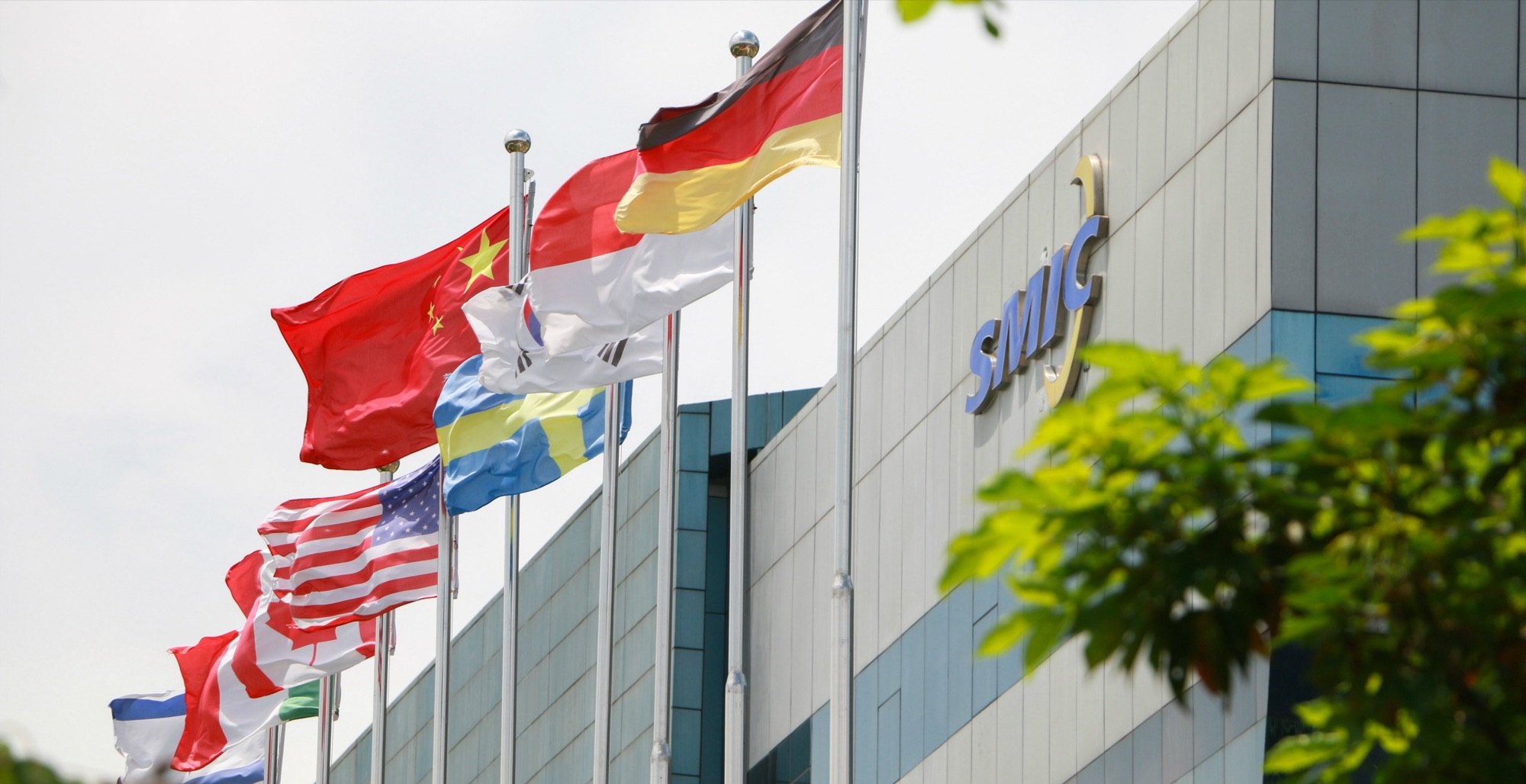
Semiconductor Manufacturing International Corporation, China’s largest contract chipmaker, reported third-quarter results on November 12. Profit attributable to owners rose to $428.4 million from $191.8 million a year earlier, up 123.4%. Revenue hit $3.19 billion, up 33.9% from a year ago and 6.1% from the second quarter. Gross margin climbed to 29.9% from 25.3%. Before you fold that into an AI-chip narrative, check what SMIC sells.
SMIC is a foundry. Other companies design the chips. SMIC fabricates them on silicon wafers and ships the wafers back. Almost 96% of third-quarter revenue was wafer services. Nvidia and Apple sell finished processors under their own names. SMIC does not. Taiwan Semiconductor Manufacturing Company, or TSMC, the world’s largest foundry, uses the same basic model when it builds leading-edge chips for many U.S. tech customers. SMIC’s quarter is a report on how full its factories were and which customer jobs filled them.
Those factories ran hot. SMIC shipped about 3.03 million standard 8-inch-equivalent wafers, up 5.7% from the prior quarter and 21.4% from a year earlier. Utilization, wafers out divided by estimated capacity, rose to 97.3% from 93.7%. Monthly capacity ticked up to about 1.12 million 8-inch-equivalent wafers. The company said higher shipments drove the sequential revenue gain, and that utilization plus product mix lifted gross margin. Twelve-inch wafers made up 78.9% of wafer revenue.
Most of that work stayed in China. Domestic customers accounted for 90.8% of revenue, up from 86.2% a year earlier. America was 7.8%, Eurasia 1.4%. Within wafer revenue, consumer electronics remained the largest slice at 40.6%. Industrial and automotive rose to 19.3% from 11.9% a year ago. Computers and tablets were 18.3%. Smartphones fell to 14.3% from 21.5%. The book looks less like a phone-chip boom and more like domestic demand across consumer parts, industrial silicon, and the supporting chips that sit next to AI systems.
Global rankings still put SMIC well behind TSMC, and close to Samsung’s foundry arm. TrendForce’s second-quarter top-ten foundry list had TSMC near 72.5% share, Samsung Foundry around 5.9%, and SMIC third at about 5.4% after a strong sequential climb. Counterpoint’s pure-play foundry table for the same quarter had TSMC around 73% and SMIC near 5%. SMIC’s $3.19 billion in third-quarter revenue compares with TSMC’s $46.72 billion. China’s biggest foundry is a clear top-three name by those trackers. It is still a small slice of the leading-edge capacity that builds the densest AI accelerators.
Export rules help explain why. SMIC sits on the U.S. Entity List, the Commerce Department roster that restricts access to many U.S.-origin technologies. In December 2024, license review for most items subject to U.S. export controls tightened to a presumption of denial, with narrow exceptions. ASML’s extreme ultraviolet, or EUV, lithography machines, the tools leading-edge fabs use for the densest chips, remain blocked for China. SMIC can push deep ultraviolet tools farther with multi-patterning, including 7-nanometer-class work shown in past teardowns, but that route costs more and yields less than EUV. This quarter’s gain is fuller factories and better pricing on the capacity China can already run.
One profit detail needs a second look. Profit attributable to owners fell 10.6% from the second quarter even though operating profit rose 32.9%. Other income swung to a $32.1 million net loss from a $275.9 million gain, mostly from investment fair-value moves and a weaker contribution from associates. The year-over-year jump still holds. The sequential soft patch came from the investment line, not empty fabs. For the fourth quarter, SMIC guided revenue up another 4% to 6% sequentially and gross margin of 26% to 28%, below the third-quarter peak.
If TSMC, Nvidia, memory names, or chip RSUs already sit in a 401(k) or taxable account, treat SMIC as a different file in the same boom. Arista grows 58.5% as AI clusters need more switches. The networking bill is catching up to the GPUs. and Apple calls memory prices 'unprecedented.' Holiday margins drop as AI servers take the chips. cover networking and memory. Taxable Investing Basics for First-Gen Professionals and RSU Vest Day Playbook for Diaspora Households help when every ticker seems to rhyme with AI. SMIC trades in Hong Kong as 00981 and in Shanghai as 688981.
The profit more than doubled because the foundry lines were nearly full and mostly serving China. That is where SMIC is gaining ground right now.
Related content
Guides
- Taxable Investing Basics for First-Gen Professionals
- RSU Vest-Day Playbook for Diaspora Households
- The High-Income Trap: Why Upwardly Mobile Asian Professionals Still Feel Broke
- Taxable Brokerage Savings Rate Benchmarks for First-Gen Professionals
- RSUs, Bonuses, and Irregular Income for Upwardly Mobile Professionals
Further diaspora reading
- Arista grows 58.5% as AI clusters need more switches. The networking bill is catching up to the GPUs. (Generational)
- Apple calls memory prices 'unprecedented.' Holiday margins drop as AI servers take the chips. (Generational)
- China's SMIC Raises Chip Prices on Strong AI Demand (Goldsea)
- SMIC Sees Foreign Clients Shifting Orders Back to China (Goldsea)
- Taxable Investing Basics for First-Gen Professionals (Generational)
Generational Take
Get the next Generational Take
Get our latest practical tips and takes in your inbox. No spam.