
Nvidia booked $115.8 billion. Buyer CapEx shows what’s funded vs still guided.
Amazon, Alphabet, Microsoft, and Meta already printed hundreds of billions in 2026 capital spending. Line those filings up with Nvidia’s data-center print and the gap between live capacity and forward guidance gets clearer.
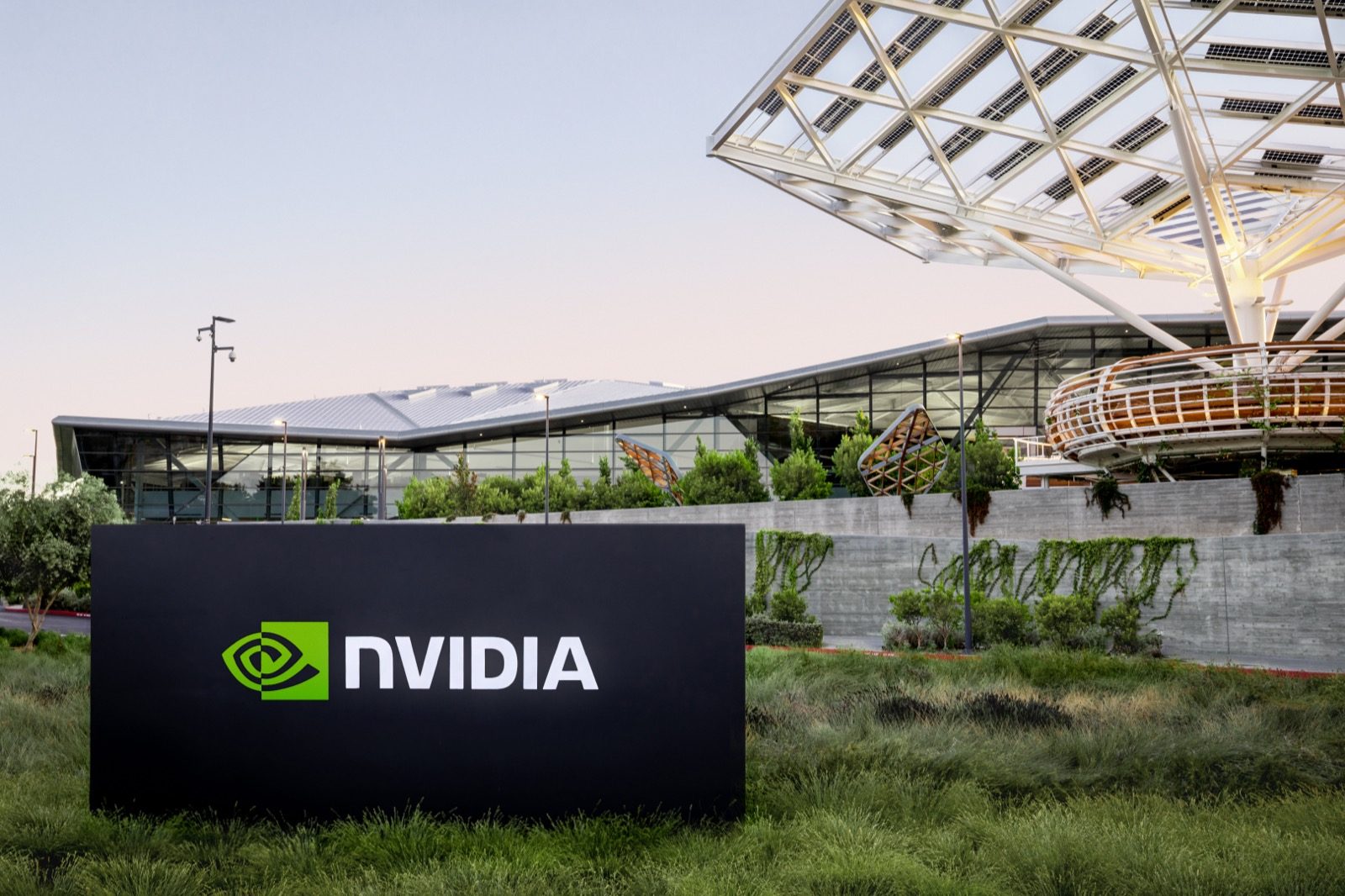
Nvidia reported $115.8 billion in revenue for the quarter ended October 25, more than double a year earlier, with data-center sales of $107.6 billion. Interim chief executive and longtime finance chief Colette Kress delivered the print on November 17, five days after founder Jensen Huang resigned as CEO. The product story is still the one Huang’s roadmap built: Vera Rubin NVL72 began production shipments and generated nearly $20 billion in its first quarter, the fastest product ramp in company history. For demand, the sharper move is to set that seller release beside the CapEx filings its biggest customers put out in late October.
On the earnings call, Kress split data-center revenue into hyperscale customers at about $60 billion, up 23% from the prior quarter, and AI clouds, industrial, and enterprise at about $47 billion, up 18%. Cloud industry backlog, as Nvidia framed it, sat at $2.5 trillion, up from $2 trillion three months earlier. The company guided fourth-quarter revenue to about $130 billion, plus or minus 3%, with no China data-center compute revenue assumed, and raised its fiscal 2028 revenue-growth outlook to about 75%. Kress said that outlook weighs data-center readiness, end-customer demand, and customers’ access to capital. That last piece is where the buyers’ filings matter.
Seller print next to buyer CapEx
Nvidia figures are from the November 17, 2026 third-quarter fiscal 2027 release and earnings call. Buyer CapEx figures are from each company’s late-October 2026 results. CapEx definitions differ (cash purchases vs. finance leases), so treat the rows as comparable timelines, not a perfect sum.
| Company | What already hit the books | What still sits in guidance |
|---|---|---|
| Nvidia (seller) | $115.8B revenue; $107.6B data center; hyperscale ~$60B, AI clouds/industrial/enterprise ~$47B | Q4 revenue ~$130B ±3%; fiscal 2028 revenue growth outlook raised to about 75% |
| Amazon | $75.9B cash CapEx in Q3 2026 | ~$220B cash CapEx for 2026; “meaningfully more” in 2027 |
| Alphabet | $51.4B CapEx in Q3 2026 | $195–205B CapEx for 2026; CapEx to “increase significantly” in 2027 |
| Microsoft | $45.2B CapEx including finance leases in the Sept. quarter | ~$170B for calendar 2026 after third-party capacity delays; spending expected to accelerate in first-half 2027 |
| Meta | $34.9B CapEx including finance-lease principal in Q3 2026 | $135–145B for 2026; 2027 budget still being set, with aggressive AI investment planned |
| CoreWeave | $14.5B CapEx in Q3 2026; ~$132.5B revenue backlog | $37–39B CapEx for 2026, much of it matched to customer contracts and prepayments |
Source: NVIDIA Q3 FY27 release and call; Amazon, Alphabet, Microsoft, Meta, and CoreWeave Q3 2026 results
Amazon, Alphabet, Microsoft, and Meta had already told investors how much they were spending to stand up the racks. In the September quarter, Amazon’s cash capital expenditures were $75.9 billion. Alphabet’s CapEx was about $51.4 billion. Microsoft’s CapEx, including finance leases, was $45.2 billion. Meta’s CapEx, including principal payments on finance leases, was $34.9 billion. Those four prints alone add up to roughly $207 billion in one quarter, on definitions that are close but not identical. Call that the funded slice: cash and leases already on the statements, buildings and servers already ordered or being installed.
Full-year guides show how much is still a promise. Amazon reiterated about $220 billion of cash CapEx for 2026 and said it expects to spend “meaningfully more” in 2027. Alphabet held $195 billion to $205 billion for 2026 and said CapEx will “increase significantly” in 2027. Meta narrowed 2026 CapEx to $135 billion to $145 billion and said it is still setting the 2027 budget while planning to keep investing aggressively in AI. Microsoft is the clearest timeline slip: CFO Amy Hood cut the calendar-2026 view to about $170 billion because some third-party GPU capacity arrived late, and she expects spending to accelerate in the first half of 2027 as those deliveries catch up. The demand did not disappear. The funded date moved.
Neoclouds sit between the hyperscalers and Nvidia’s own balance sheet. CoreWeave reported $14.5 billion of CapEx in the third quarter, raised 2026 CapEx guidance to $37 billion to $39 billion, and carried about $132.5 billion of revenue backlog. Management has said much of that build is backed by customer contracts, delayed-draw loans, and prepayments. Nvidia itself disclosed $32 billion of commitments tied to neocloud agreements at quarter-end, plus $390 billion of purchase commitments further up the supply chain. That is not the same as cash already spent on live halls. It is contract coverage stacked on CapEx the buyers have already printed.
Line the calendars up and the $115.8 billion quarter looks like a settlement of earlier build plans, with a large forward book still hanging on guidance. Hyperscalers have named hundreds of billions of 2026 spending and, for Amazon and Alphabet, even larger 2027 plans. Microsoft’s delay shows how third-party power and delivery can push CapEx from one half-year into the next without killing the order. Nvidia’s raised fiscal 2028 growth target and its “access to capital” caveat are the seller saying the same thing from the other side of the purchase order.
If Nvidia, the big cloud names, or chip RSUs sit in a 401(k), read the seller and the buyers in the same sitting. A record Nvidia print can coexist with CapEx that slipped a quarter, negative free cash flow at a hyperscaler, or backlog that still needs financing. Map concentration with Taxable Investing Basics for First-Gen Professionals and RSU Vest Day Playbook for Diaspora Households. If your paycheck sits inside the same AI buildout, Salary Benchmarks and Market Data for First-Gen Negotiations keeps the career file separate from the ticker file.
Nvidia already booked $115.8 billion. The biggest buyers have already booked a large share of the CapEx that fills those racks for 2026. What investors are still underwriting is 2027 spending, delayed third-party capacity, and neocloud financing that has not fully turned into powered floors.
Related content
Further diaspora reading
- Three OpenAI alumni built Applied Compute. Why is Palo Alto Networks buying it? (Generational)
- Taxable Investing Basics for First-Gen Professionals (Generational)
- RSU Vest Day Playbook for Diaspora Households (Generational)
- Nvidia Is Rare Tech Giant With Founders' Kids in Executive Posts (Goldsea)
- Career Traps and Proactive Solutions (Goldsea)
Generational Take
Get the next Generational Take
Get our latest practical tips and takes in your inbox. No spam.