
Two finance exiles put Korean konjac jelly in Target's beauty aisle
Cocokind founder Priscilla Tsai and Glow With Ava creator Ava Lee launched Mimitime, a collagen konjac snack, exclusive at Target for $2.99 a pouch. The useful file is how diaspora founders turn a corridor habit into national retail cash flow.
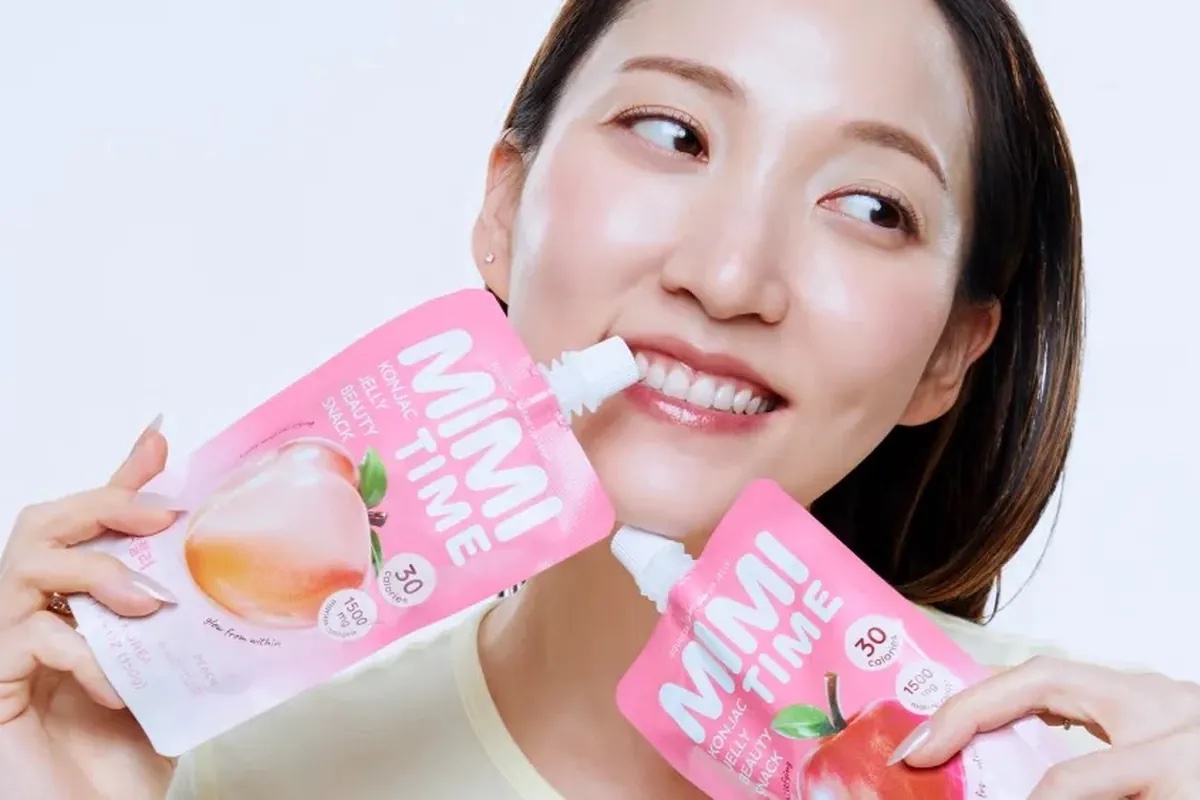
On August 16, shoppers walking Target's beauty aisle could pick up a $2.99 pouch of konjac jelly next to the collagen gummies and hair chews. The brand is Mimitime, a collagen-infused Korean-style snack co-founded by Priscilla Tsai, the Taiwanese American founder of Cocokind, and Ava Lee, the Korean-born creator behind Glow With Ava. The website soft-opened on August 8, a date Tsai's circle treated as lucky. National retail followed eight days later, exclusive to Target and target.com.
Each pouch carries 30 calories, 3 grams of sugar, and 1,500 milligrams of marine collagen in strawberry, peach, grape, or apple. Ten-packs sell for $28 on mimitime.com. The jelly is made in Korea from konjac root, the same plant behind the chewy, low-calorie snacks that fill convenience-store fridges from Seoul to Busan. Mimitime swaps the sugar alcohols that leave an aftertaste on many imported packs for organic brown sugar, and it sits in beauty ingestibles beside Lemme, the Kourtney Kardashian Barker wellness brand, instead of an H Mart cooler.
The name pulls from mi, Korean for beauty. Cindy Lloyd, a Wharton MBA who previously worked as Cocokind's chief of staff and joined Mimitime as employee number one, is CEO. Tsai is president. Lee brings the audience that already associates her with #jelloskin, the phrase she popularized for plump, resilient skin. She has about 1.7 million TikTok followers and previously launched byAVA, an ingestible-beauty line she built after leaving investment banking, hedge-fund, and private-equity investor-relations work.
Tsai's résumé runs parallel. Raised in Michigan by Taiwanese American parents who ran a Chinese restaurant, she studied finance and accounting at the University of Pennsylvania's Wharton School, then covered food manufacturing and retail stocks as an equity research associate at J.P. Morgan. In 2014 she left Wall Street to bootstrap Cocokind, a clean skincare line priced for Target and Ulta shoppers who skip prestige counters. Covering Annie's and Whole Foods as an analyst had already pointed her toward everyday grocery economics. Cocokind gave her the retail scars and the buyer relationships that a first-time snack brand usually lacks.
Lee and Tsai met nearly eight years ago while building their first brands, after both had worked in finance. Shared taste for Korean and Asian snacks turned into a two-year product crawl with Korean suppliers, including trips with Lloyd to lock texture and flavor. Corridor knowledge only pays when someone does the unglamorous work of translating it for a buyer who has never squeezed a konjac pack. The peach illustration on the pouch is the easy part.
The harder part is the deal structure. Lee enters as a co-founder, so her upside sits behind inventory turns, slotting math, and a January 2027 plan in which Target has already committed to more than doubling Mimitime's footprint. Tsai is applying Cocokind's mass-retail playbook to a food-adjacent format. Lloyd owns the operating middle. For diaspora professionals weighing a creator deal, the useful question matches the one in Katie Fang's ESW equity stake: cash that pays rent this month, or ownership that only matters if the SKU survives a year on shelf?
Mimitime projects more than $1 million in sales in its first four-and-a-half months. That is an early brand target, still unaudited, and it shows how fast beauty ingestibles have become a real Target category. Lemme already sits nearby as the aisle's celebrity-wellness reference point. Amanda Nusz, Target's senior vice president of merchandising for essentials and beauty, framed the exclusive around guests treating beauty products as everyday wellness routines. The retailer is betting a Korean convenience-store format can travel when it looks like beauty and costs less than a latte.
Keep the collagen claim in proportion. Mimitime markets the snack as supporting glow from within. Dietary supplements can make structure-and-function claims under U.S. rules when manufacturers include the required FDA disclaimer, and the agency does not pre-approve those products the way it reviews drugs. Peer-reviewed work on oral collagen and skin outcomes is mixed and dose-dependent; 1.5 grams per pouch sits far below the 10-to-20-gram servings some collagen powders advertise. Read the pouch as a low-calorie snack with a beauty story attached. Leave diagnosis and full supplement protocols to clinicians.
For first-gen households, the quieter money story is the career stack. Both founders left prestige finance jobs, built audiences or retail brands that print cash, then used that surplus and network to fund a second product bet. How to Build Generational Wealth as a Child of Immigrants maps that sequence. So do Immigrant-Owned Small Business Financing Basics and Side Income and 1099 Planning for Diaspora Professionals on Work Visas when the next idea is a brand or a creator equity deal.
Parents who ran restaurants or import shops will recognize the pattern even if the aisle is new: find a product people already love in one market, fix the version that fails a new customer, and put it where traffic does not need a tutorial. The risks travel with it. A Target exclusive concentrates volume and cancel risk. Beauty claims invite scrutiny. Plain konjac already sits on Amazon and in H Mart coolers at lower prices, without collagen badges. Mimitime is betting Target shoppers will pay for convenience and a beauty frame.
If you are building something adjacent, keep Monday short. Write down who owns what before launch week: equity split, decision rights, and who funds a failed slot. Price the partnership against cash you actually need this quarter. Stress-test family support and living costs in the Family Support Budget Calculator so a second brand does not quietly raid the emergency fund. If the product comes from a corridor habit your household already knows, ask what has to change for a buyer who has never tasted it.
By January 2027, Target says Mimitime's shelf space should be more than twice as large. Sell-through will decide whether the pouches earn that expansion. Until then, the useful file is the sequence sitting behind the $2.99 sticker: finance exit, corridor product, operator in the middle, national door.
Related content
Guides
- How to Build Generational Wealth as a Child of Immigrants
- Immigrant-Owned Small Business Financing Basics
- The High-Income Trap: Why Upwardly Mobile Asian Professionals Still Feel Broke
- How to Negotiate When You Were Raised Not to Ask
- Side Income and 1099 Planning for Diaspora Professionals on Work Visas
Further diaspora reading
- Katie Fang takes a beauty equity stake in ESW. Cash sponsorships pay rent; ownership pays later. (Generational)
- How to Build Generational Wealth as a Child of Immigrants (Generational)
- Immigrant-Owned Small Business Financing Basics (Generational)
- Cocokind's Transparent Beauty Inspired by Founder's Personal Skincare (Goldsea)
- Pooja Bavishi Brought South Asian Flavors to Mainstream Desserts (Goldsea)
Generational Take
Get the next Generational Take
Get our latest practical tips and takes in your inbox. No spam.