
Chili crisp hit 12,000 U.S. stores. A reset can still pull the jar.
Asian American founders moved chili crisp and calamansi out of the too-niche bin and onto Costco and Walmart shelves. Circana put the ethnic aisle at $8.84 billion. A sale or a buyer reset can still empty the slot.
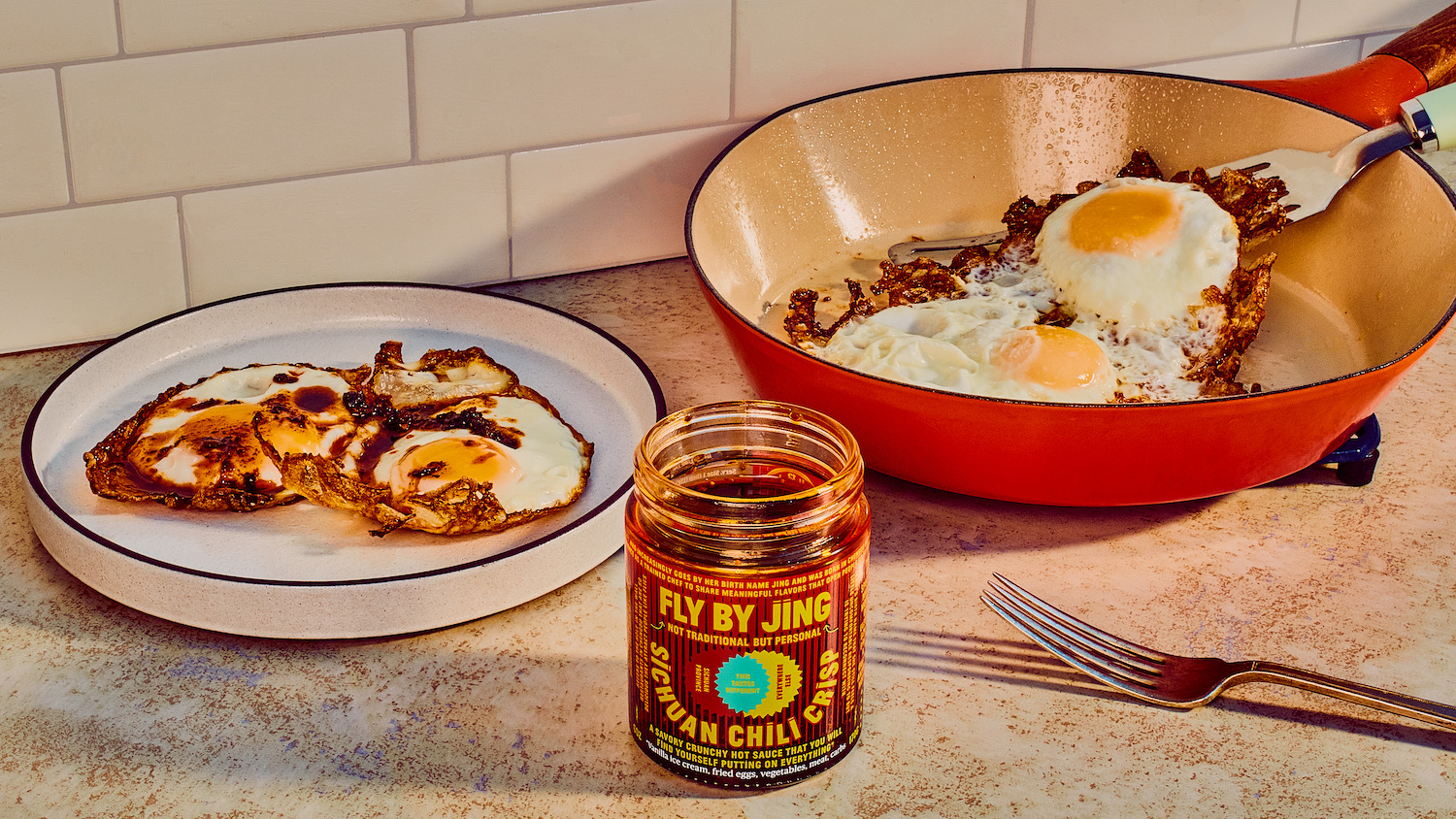
Jing Gao's chili crisp is now in more than 12,000 U.S. stores. A Costco two-pack of the six-ounce jars has been $14.99 this summer in Los Angeles, Orange County, and Hawaii. Around 2018, she has said, about a hundred investors called the category too niche and walked.
For families who already split 99 Ranch and a mainstream grocer, that is the file. The jar can live next to ketchup, and a buyer meeting can still take it off. Grocery chains redo the shelf set a few times a year and drop what is moving too slowly.
Gao was born in Chengdu, the capital of Sichuan province, and built Fly By Jing in Los Angeles. Chili crisp was already on immigrant tables. Lao Gan Ma, the Guizhou brand with the woman on the lid, has been a mass-market staple for decades. Gao's bet was a premium Sichuan jar, made in Chengdu, sold as an American pantry item.
A Kickstarter campaign around 2018 raised about $120,000. By 2025 the jar was in Walmart, Target, Whole Foods, and Costco. TASTE, the food magazine, later called Fly By Jing an eight-figure business growing about 27 percent year over year. We have not seen a public filing that pins a dollar total.
Sichuan on a Walmart shelf feels like winning in a lot of second-gen kitchens. The receipt is how you can tell it won. At many Walmarts a six-ounce Fly By Jing sits near $10. A 7.4-ounce Lao Gan Ma is often closer to $5.
The cheaper jar is still the weeknight staple. The $10 jar is the one that taught the rest of the store the words.
Circana, the Chicago firm that reads grocery scanners, put the whole ethnic aisle at $8.84 billion in the 52 weeks ending June 16, 2024. From April 2023 to April 2024, sales in the Asian and ethnic aisle grew nearly four times faster than grocery overall.
In May 2026, Circana told CNBC that sales of Asian grocery items rose from $1.57 billion in 2021 to more than $2.31 billion this year. Pew Research Center counted 24.8 million Asian Americans in 2023, more than double the 2000 count, about 7 percent of the country. The buyers were already in the parking lot. What changed is which aisle they do not have to hunt.
When parents visit, the 99 Ranch or H Mart run still fills the fridge. Rice, oil, tofu, and the $5 chili crisp live there. The Whole Foods or Costco jar is what you put out for friends who only know the category from a recipe video, and only if that warehouse actually carries it.
Other founders are trying to live in both stores. Sandro Roco, a Filipino American founder, has put Sanzo, his calamansi seltzer, in about 7,500 stores, TASTE said. Calamansi is the small citrus a lot of Filipino kitchens already keep.
Caroline Dai grew up in Shenzhen, worked in Vancouver finance, and is getting dry tofu snacks onto Whole Foods shelves under TofuGo. TASTE said her first month was five figures and that she is aiming at a $1 million first year. Treat that as her target.
Living in both kinds of stores is expensive. Vanessa and Kim Pham, Vietnamese American sisters, built Omsom as an Asian sauce-kit brand, raised more than $3 million, and sold it in June 2024 to DayDayCook, a New York-listed Asian food company. A year later, TASTE found the products largely gone from shelves and online listings. The founders declined to comment.
A sale is one way to lose the slot. A quiet reset is another. Chitra Agrawal started Brooklyn Delhi with her partner after years of writing about Indian food.
She has had to ask shoppers to back a roasted garlic achaar, the Indian pickle condiment, after Whole Foods Market left it off a new shelf set. TASTE said the retailer later dropped the tomato achaar too. Some product pages still linger online. From the cart it looks like this: the jar is there on Tuesday and gone on the next trip.
Once the scanners showed the growth, the big companies showed up. Heinz and McCormick now sell chili-crisp-style sauces. Pulmuone, the South Korean food company behind Nasoya tofu, opened a $55 million expansion in Ayer, Massachusetts, in March. Kewpie, the Japanese mayo maker, started a Tennessee plant in 2025.
A U.S. plant is easier to restock than a jar that has to clear a container. Goldsea reported last year on tariff pain at Los Angeles Asian supermarkets that live on imported goods. A jar still made in Sichuan feels that before ketchup does.
Most pantry brands never get Gao's store count. A lot of the ones that sprint on venture money do not keep the stores they get.
If Heinz is making chili crisp, the flavor already won the aisle. The founder jar stays only while it keeps selling.
This is educational reporting on grocery sales and brand coverage, not investment, legal, or business advice. Door counts and sales figures come from company comments and trade press, not a single audited category file.
Related content
Further diaspora reading
- Food and Grocery Cost Benchmarks for Diaspora Households (Generational)
- Jing Gao Puts Sichuan Chili Crisp Back on Costco Shelves This Summer (East Table)
- Tina Lee takes T&T into California. San Jose's first week beat every Loblaw opening. (Generational)
- Immigrant-Owned Small Business Financing Basics (Generational)
- Trump's Tariffs Inflict Pain on LA's Asian Supermarkets (Goldsea)
Generational Take
Get the next Generational Take
Get our latest practical tips and takes in your inbox. No spam.