D-Wave’s revenue rose 21%—to $4.5 million. Here’s what customers actually buy.
Cloud access and consulting carried the quarter; system sales fell. Bookings dipped even as the $38.3 million backlog jumped, and gross margin slipped with the mix. If you hold QBTS—or hear “quantum” in the office—this is what the commercial business looks like today.
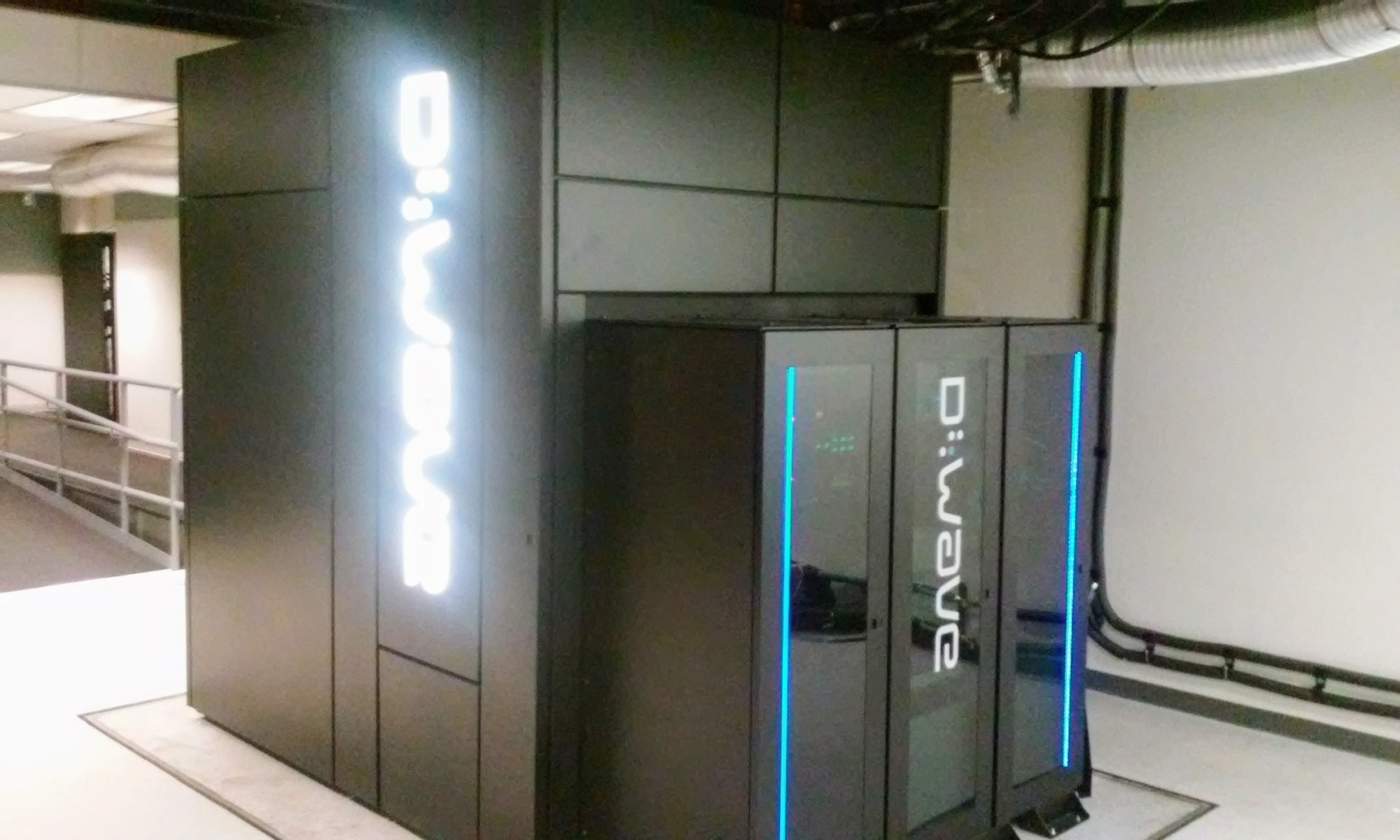
D-Wave Quantum reported third-quarter results on November 10. Revenue was $4.5 million, up 21% from a year earlier—growth you can see, on a business that is still tiny next to the hype. The Palo Alto company, ticker QBTS, sells cloud time on quantum machines, consulting to put those machines to work, and the occasional system that lands in a lab. Chief executive Alan Baratz talked up year-to-date demand and the pipeline. Open the income statement and you still see how early this commercial chapter is.
What customers buy is more ordinary than the sci-fi pitch. D-Wave’s annealing systems are built for optimization problems—scheduling, routing, network planning—while the general-purpose “gate-model” machines usually steal the headlines. Through Leap, its quantum-computing-as-a-service cloud, customers rent time on those annealers and hybrid solvers. Professional-services teams walk companies from a proof-of-technology into a pilot. System sales show up when a university, government lab, or research buyer wants a machine on the floor. In the quarter, QCaaS revenue was $2.2 million, up from $1.4 million. Professional services hit $2.0 million, up from $0.5 million. System sales fell by $1.5 million. Cloud and consulting carried the growth; the big-box installs stayed soft.
That mix squeezed margins. GAAP gross margin fell to 52.9% from 71.4%. Management blamed a heavier share of lower-margin professional services, plus a bit more stock-based compensation. Non-GAAP gross margin was 63.6%, still down more than 14 points. If QBTS sits in a taxable brokerage account, that is the line under the growth headline: sales can rise while the mix gets less profitable. Operating expenses jumped 84% to $55.9 million. Adjusted EBITDA loss widened to $37.7 million. Cash and marketable securities were $503.4 million at September 30, and D-Wave closed a definitive Commerce Department deal for access to up to $100 million in CHIPS and Science Act funding, paid in installments if it hits milestones. The balance sheet can fund the roadmap for a while. Getting $4.5 million quarters to look like a scaled software business is the harder problem.
Bookings and revenue get tangled in quantum coverage. Bookings are orders expected to become revenue later, and they swing when one large contract lands—or slips a quarter. Q3 bookings were $1.9 million, down 19%. For the first nine months, bookings were $37.4 million, up 611%, including $2.3 million from Quantum Circuits, the Connecticut quantum-hardware company D-Wave bought in January, booked just before that deal closed. Remaining performance obligations, or RPO—the contracted work not yet performed—hit $38.3 million, up 1,221% from $2.9 million a year earlier. About 59% of that backlog is expected as revenue in the next twelve months. Recognized sales stayed small while the forward book got much thicker. Read that backlog as a dated promise—work still to deliver, not cash already cleared.
Some of the commercialization is already past the demo stage. D-Wave said it recognized revenue from more than 100 customers in the quarter, and 48% were commercial enterprises. Investor materials cite over 125 customers across the first nine months of 2026. NTT DOCOMO, Japan’s largest mobile operator, put a second production application on D-Wave’s hybrid quantum stack: optimizing tracking-area lists across network zones. In one representative job spanning 333 base stations, the run finished in about five minutes and fed day-to-day network planning. Peak location-registration signals fell 65.3%; paging signals fell 7%. That is an ops win a carrier can put into the daily plan. Italy also took delivery of a 4,400-plus-qubit Advantage2 annealing system for installation in Como, funded by Swiss Quantum Technology for Q-Alliance research and industry access. Gate-model hardware is still mostly ahead of paying customers: D-Wave launched a simulator beta for its dual-rail superconducting approach, with early users including Spain’s BBVA bank, Florida Atlantic University, and Germany’s Jülich Supercomputing Centre. Annealing is what ships. Gate-model is what the roadmap sells.
Partners are lining up around the same niche. SkyWater, the U.S. specialty chip foundry D-Wave already works with, extended a multi-year relationship and ran a proof-of-technology that cut maintenance lot delays by up to 30%. CGI, the global IT consultancy, plans to fold D-Wave platforms into client work in logistics, transportation, and retail. LG CNS, the South Korean AI and systems integrator, signed an MOU aimed at moving enterprise optimization from proof-of-concept into production. The money that is showing up first sits in optimization workloads, hybrid solvers, and the people who can implement them.
If QBTS sits next to RSUs or a tech sleeve at home, size it like any early-revenue public science bet. Taxable Investing Basics for First-Gen Professionals and High-Income Asian American Money Mistakes keep speculative names from crowding rent, remittances, and emergency cash. RSUs, Bonuses, and Irregular Income for Upwardly Mobile Professionals and the RSU Vest Day Playbook for Diaspora Households help separate employer equity from ticker curiosity. For the wider field, Goldsea’s pieces on quantum startups, IonQ’s Jungsang Kim, and U.S. stakes in quantum firms sketch who else is in the race.
You can buy quantum products today. The billable business behind them is still small, service-heavy, and stacking backlog faster than a mature sales machine.
Related content
Further diaspora reading
- Shopee’s parent is becoming a much bigger lender. Meet Monee. (Generational)
- Taxable Investing Basics for First-Gen Professionals (Generational)
- The Startups Most Likely to Beat Tech Giants in Realizing Quantum Computing Potential (Goldsea)
- A Korean American Duke Professor Leads a Highly Promising Public Quantum Computing Startup (Goldsea)
- US to Invest in Quantum Computing Firms in Exchange for Stakes (Goldsea)
Generational Take
Get the next Generational Take
Get our latest practical tips and takes in your inbox. No spam.