
From Belgravia to Phnom Penh: how heir tracers find relatives after migration splits a family
Elizabeth Malhotra’s £1.7 million London estate reached 81 cousins after her marriage to Pakistani airline executive Mohan Malhotra. In Cambodia, researchers later found three half-sisters in Phnom Penh who had never been written into a European father’s file.
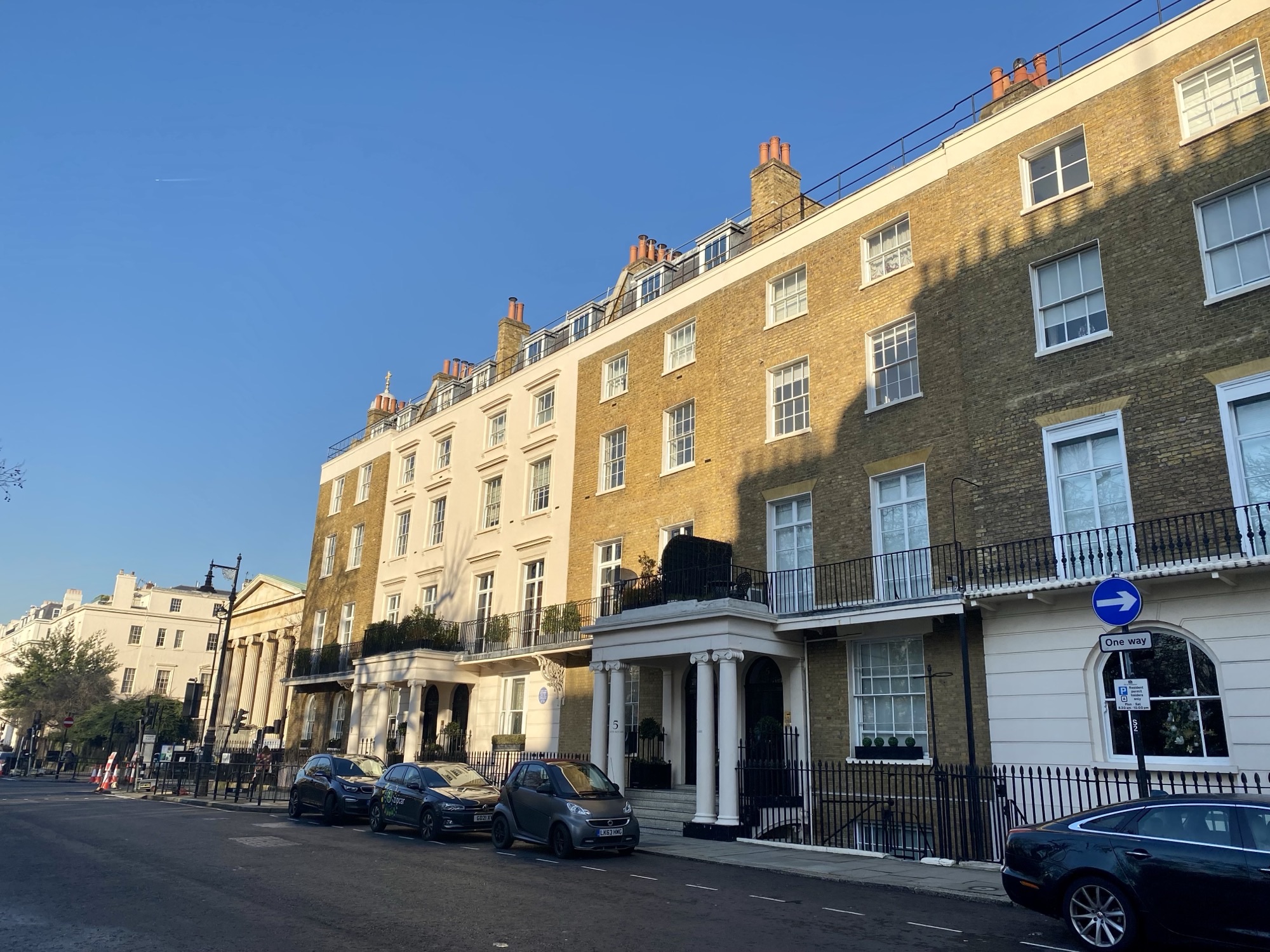
Elizabeth Malhotra left Belfast as Elizabeth Grogan in the early 1950s, married Pakistani airline executive Mohan Malhotra in America, and later lived with him in London’s Belgravia. Mohan, born in Pakistan and associated in reporting with TWA work in the United States, died about 20 months before her. When Elizabeth died in a London care home on October 22, 2009, she left no will, no children, and an estate later valued around £1.7 million. Her name went onto England and Wales’s bona vacantia list of unclaimed estates. Probate researchers at Fraser & Fraser, later featured on the BBC series Heir Hunters, rebuilt the Irish side of her tree.
The heirs they found were not waiting by the phone. Coverage and the Heir Hunters episode identify Geraldine, a first cousin once removed in Belfast, among about 81 distant cousins entitled to share the estate. Geraldine’s individual slice was unlikely to be a fortune once the tree was that wide. What the case made public was the cross-border shape of the life behind the money: a Belfast emigration, a Pakistani marriage, years in America, a Belgravia address, and cousins who only learned the full story after researchers knocked.
That is closer to how Asian and South Asian diaspora households actually meet heir tracing than a pure lottery script. The person with the Asian biography may be the spouse who died first, the relative who stayed abroad, or the branch nobody wrote into the Christmas card list. The paperwork still has to prove who is entitled under intestacy rules in the country holding the assets.
In Phnom Penh, the trail runs the other way. Banian Genealogy Asia, a Southeast Asia probate-research firm partnered with Europe’s Coutot-Roehrig network, has published a field case about three adult sisters in the Tuol Kork district. Their father had left Cambodia for Europe decades earlier intending to work, save, and reunite the family. In Europe he built a new life. At his death, the designated European heir learned that three half-sisters existed in Cambodia. Researchers worked civil registries, village records, neighbors’ memories, birth certificates, and family books before the sisters received official confirmation of their rights. The firm does not publish their full names the way U.K. television cases do. The geography is still the point: the missing heirs were in Asia.
Banian’s other published notes stay on the same corridor. In one Paris-region estate, a former development worker who settled in Cambodia in the 1960s left no known heirs in Europe; local work identified two nephews in Phnom Penh through archives and customary certificates. In a Vietnam-linked Paris file, a family name appeared under three spellings until Vietnamese and European civil-status records were cross-checked into one lineage. In a Laos example, when historical civil records were thin, witness statements legalized by a village chief and district authorities were used to reconstruct filiation. These are firm case summaries, not celebrity windfalls, and they show why Asia-facing searches lean on field proof as much as online trees.
Hong Kong shows the failure mode when a beneficiary abroad cannot be found. In the High Court matter In the Estate of Lin Fat Wong, also known as Wong Lin Fat (黃連發), HCMP 1750/2024, administrators searched records in Hong Kong and the United Kingdom, advertised in newspapers, and visited a last known London address for a missing beneficiary identified as MMK. After roughly 25 years without a claim, the court granted a Benjamin Order so the estate could be distributed on the assumption that she had died without heirs. That is the opposite of Geraldine’s knock on the door: a Chinese estate stalled until a court accepted that the overseas search had run out.
Japan adds a registration deadline many overseas children of Japanese parents are only now hearing about. From April 2024, heirs who acquire Japanese real estate through inheritance generally must register the ownership change within three years of learning of the inheritance, with a March 31, 2027 transitional deadline for earlier unregistered cases. Japan’s Ministry of Justice ties the rule to land with unidentified owners. Overseas heirs are not exempt. Apostilles, translations, and a Japan-based contact often sit between a U.S. or Canadian adult child and a house still in a parent’s name.
Suspicion still travels with every unexpected letter. The U.S. Federal Trade Commission has warned about mail claiming you are heir to a multi-million-dollar inheritance or life insurance policy from a long-lost relative, then harvesting personal data or advance fees for money that does not exist. Legitimate probate research and scam mail can use similar emotional hooks. In the Malhotra reporting and in Banian’s materials, the process that eventually held up was documentation: trees, certificates, court or notary confirmation, and fees taken from a recovered share rather than cash demanded up front. Those are published industry patterns, not a seal of approval for any particular outreach.
Urban Institute analysis of the 2022 Survey of Consumer Finances has separately shown a large gap for Asian households between older homeowners who expect to leave an inheritance and households that report having received one. Named heir-tracing cases are the loud end of that gap. The quiet end is a Belgravia-scale file nobody expected, a Phnom Penh sisterhood nobody listed, or a bank account with no payable-on-death designation.
What the cases share is proof before poetry. Geraldine needed an Irish cousin tree that survived Elizabeth’s decades abroad and Mohan’s Pakistani chapter. The Phnom Penh sisters needed Cambodian civil-status evidence a European succession file would accept. The nephews needed customary certificates. The Wong estate needed a Hong Kong court order after London searches failed. Japanese overseas heirs need registration filings whether or not anyone wants the house. Migration can erase the kitchen-table memory of a relative. It does not erase the need for records that can cross borders.
This piece summarizes published reporting, broadcast case notes, firm field write-ups, and government rules. It is not legal advice, tax advice, or a recommendation to hire any firm, sign any contingency contract, or claim any estate. Entitlement and filings depend on the country, the relationship proof, and facts a qualified professional would have to review for a specific situation.
For educational context on diaspora property and records, start with Cross-Border Inheritance and Probate Awareness for Diaspora Families and When Parents Own Property Abroad: A Checklist. For the document pile itself, What Documents to Organize for Aging Immigrant Parents and Inheritance and Estate Conversations in Diaspora Families stay on what papers exist and how families talk about them before a stranger’s letter arrives.
Related content
Generational Take
Get the next Generational Take
Get our latest practical tips and takes in your inbox. No spam.