Noah Cho's cafes made $6.24 million. Four Korean lattes are most of the drink sales.
The Ventures, a Seoul early-stage firm, wrote an undisclosed seed check on October 15. Smoking Tiger's 2025 sales were $6.24 million, up 39%. Corn, mugwort, banana milk, and black sesame account for more than half of the drinks.
Noah Cho's cafes took in $6.24 million last year. On October 15, The Ventures, a Seoul firm that backs young companies, said it had written Smoking Tiger a seed check so the shops can open past California and Texas. The firm did not say how much.
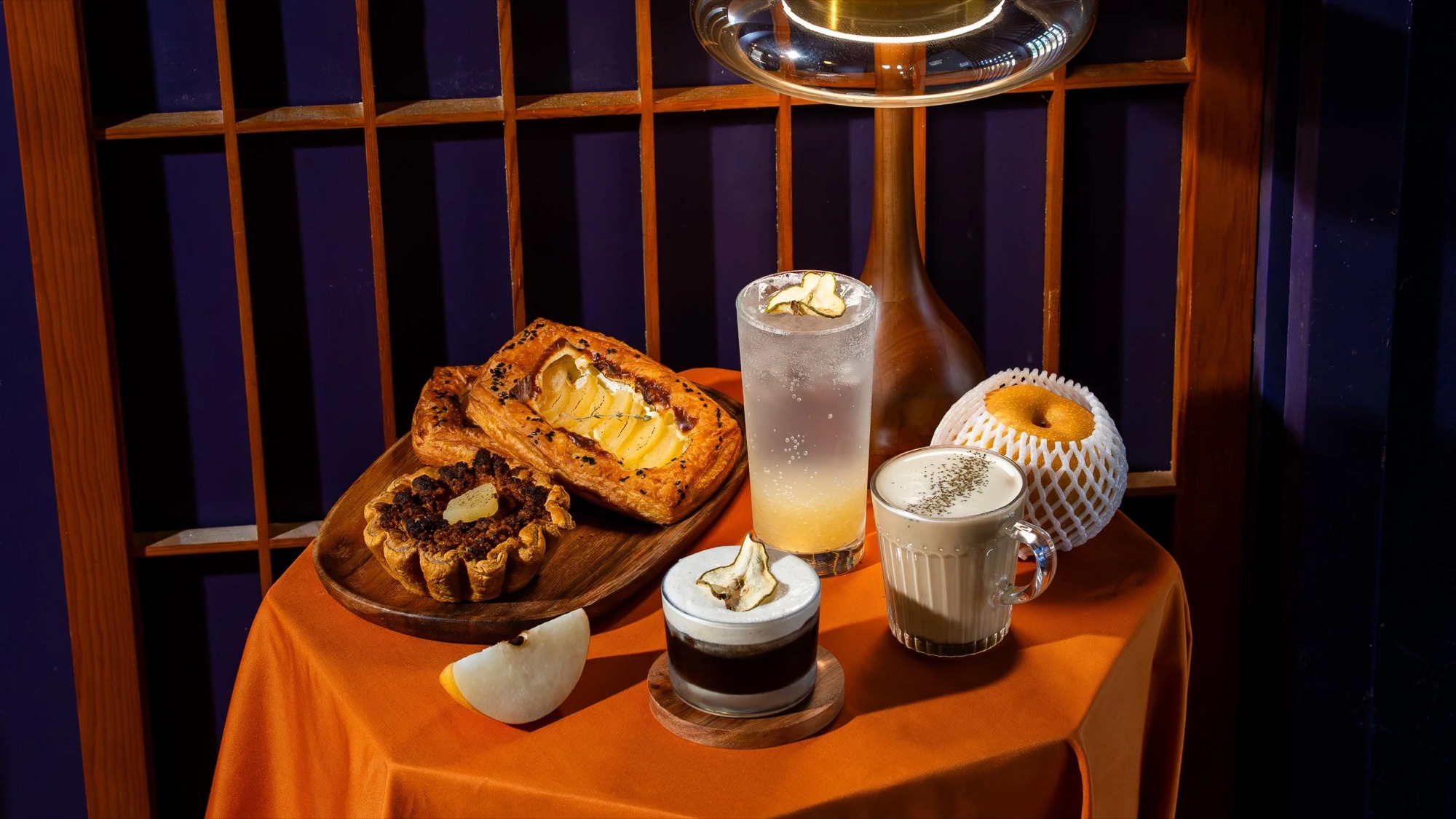
The number a customer can see is on the menu. Lattes made with corn, mugwort, banana milk, and black sesame account for more than half of drink sales. Mugwort is ssuk, the gray-green herb in Korean rice cakes, and banana milk is the sweet canned drink from a Korean convenience store.
The bread counter carries cream cheese garlic bread, purple sweet potato mochi bread, and salt bread. Cho started the company in Southern California in 2020 because he wanted that familiar American errand, coffee and a loaf, to taste like the Korea he actually knew.
He immigrated to the United States at age 6, he told Maeil Economy in June 2025. He kept going back, and what stayed with him was how young Korea looks now. In the U.S., he said, the country still got filed under bibimbap and hanbok.
The cafe's name comes from a Korean folktale line about a long-ago time, the days when tigers smoked, and it is also a name that sticks in English. Cho had worked in food and beverage marketing. The funding note says he has spent more than a decade starting food brands, has run more than 20 shops himself, and watches what a new store costs from a construction background.
Ayoung Choi, a pastry chef with more than 20 years in Korean bakeries, and Andy Lee, who has launched about 10 food and beverage brands, are the other founding members. The $6.24 million was 2025 sales, up 39% from $4.5 million in 2024. An app the company runs has 71,885 members, and the note puts the repeat-visit rate above 64%.
There are two kinds of shop. The large one is a Bread Factory, meant as a neighborhood room, and the smaller Coffee Lab was designed so a franchisee could open it for less. The Bread Factory in Carrollton, north of Dallas, passed $180,000 in its first 30 days after a June opening, and a Coffee Lab in Monterey Park, in Los Angeles's San Gabriel Valley, did $120,000 in its first 60 days.
Those opening months are a burst. In the June 2025 interview, Cho said a busy large store was doing about $130,000 to $150,000 a month, and a small one about $80,000 to $90,000. The year still closed at $6.24 million, which is the figure that has to cover the quiet weeks.
The dough is not mixed in every cafe. A subsidiary called Mugunghwa, also known as M.G.H., runs a central kitchen of about 560 square meters, roughly 6,000 square feet, freezing dough, pastry sheets, and fillings for the shops. The company says that kitchen can supply about 40 stores.
Forty is a smaller map than the one he drew in that interview, when he talked about 100 to 150 stores and more than $200 million in sales within five years. He had already taken money from Strong Ventures, a Korean early-stage investor, and from angel investors. He did not publish those amounts either.
The October plan names places. A Dallas-Fort Worth network comes first, then Austin and Houston, then New Jersey, Georgia, and Virginia with partners who would hold a state license. Cho said the work is to carry the Southern California menu, and the way those shops run, into other states at the same quality, and to grow into at least five states from a base in Texas.
More than 100 people have asked about a franchise, the funding note says. Asking is not a lease. The check meant to pay for those states was not published, so a reader cannot tell whether it covers one Bread Factory or a year of kitchens.
The cafes are opening into a category Circana, the consumer-data firm, had already measured as growing. In September 2024 it said Korean restaurant locations in the U.S. had risen 10% over the prior year, while a third of local television markets still had none. Tim Fires, president of global foodservice at Circana, tied the growth to the Korean Wave, the spread of Korean music, television, and food.
Smoking Tiger is a cafe sitting inside that appetite. Circana was counting restaurants.
Chulwoo Kim, who leads The Ventures, said Americans who met Korea through songs and dramas are meeting it again in a daily cup. The company's evidence is the repeat rate and the Carrollton month, which a customer in Monterey Park can test by going back. The seed check is the part they cannot see.
What a second shop costs, and whether the frozen dough still tastes like the first one, sits under the expansion talk. Immigrant-Owned Small Business Financing Basics is how a founder pays for the next door. Cash Flow for Ecommerce, Import, and Wholesale Diaspora Businesses is the distance between a busy opening month and the weeks that have to fund the kitchen.
This is educational reporting on an October 15 funding note and a June 2025 interview. It is not an offer to buy a franchise or a stake. The size of the seed check was not disclosed.
Related content
Further diaspora reading
- Korean Bros put 100,000 cups of tteokbokki into Target. The trial still decides if they stay. (Generational)
- Immigrant-Owned Small Business Financing Basics (Generational)
- Cash Flow for Ecommerce, Import, and Wholesale Diaspora Businesses (Generational)
- Food and Grocery Cost Benchmarks for Diaspora Households (Generational)
- Korean American shop owners used to outnumber office workers. New stores under two years old fell to 8%. (Generational)
Generational Take
Get the next Generational Take
Get our latest practical tips and takes in your inbox. No spam.