
Asians hold 39% of technical roles at Silicon Valley's largest tech firms. Immigration law built that share.
Parents still blame culture. The paper trail runs through Hart-Celler, H-1B, Express Entry, and a dinner-table bet on credentials that travel.
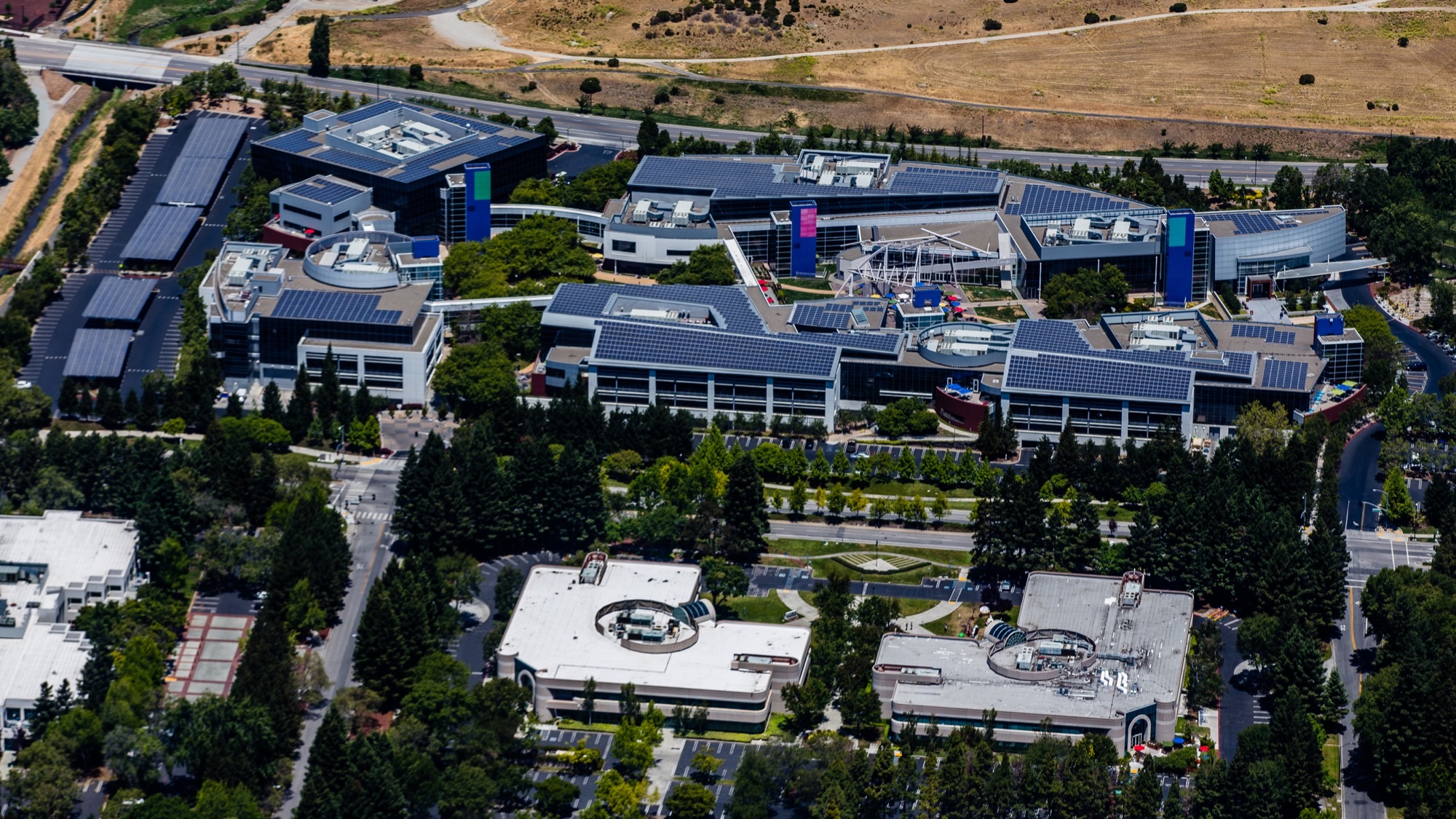
Walk a Mountain View cafeteria at lunch and the headcount tells a story relatives still explain with culture. At Silicon Valley's largest technology companies, Asian workers held about 39 percent of technical roles in 2024, Joint Venture Silicon Valley reports. White workers held about 43 percent. Black and Hispanic or Latino shares were much smaller. Nationwide, the Equal Employment Opportunity Commission puts Asians at about 18 percent of the high-tech workforce. The Bay Area is denser. So is the dinner-table myth that Asians simply love coding.
The paper trail points somewhere else. For decades the United States made it hard for Asians to enter at all. Chinese Exclusion and later national-origins quotas kept the door narrow. The Immigration and Nationality Act of 1965, often called Hart-Celler, swapped those quotas for family reunification and skills. Degrees suddenly mattered more than ancestral maps. Chinese, Indian, Filipino, Korean, and other Asian immigrants who could clear education and employment screens arrived in numbers that remade the community.
Then the internet boom needed people who could ship software. The Immigration Act of 1990 created the modern H-1B specialty-occupation visa, the temporary work status still stapled to so many Bay Area offer letters. In fiscal year 2024, U.S. Citizenship and Immigration Services approved petitions that went about 71 percent to people born in India and about 12 percent to people born in China. Roughly 64 percent of those jobs were computer-related. The visa did not invent Asian aptitude. It paired American hiring demand with universities and English-ready STEM pipelines across Asia that could answer the call.
Look at who got through those filters and the "culture" story wobbles. Jennifer Lee, a Columbia University sociologist, and Min Zhou at UCLA call today's Asian immigrant stream hyper-selected: newcomers were often more likely to hold college degrees than adults who stayed home, and often more likely than the U.S. average. That selection, they argue, rebuilt what families treated as a normal win. Their "success frame" still shows up in living rooms: elite school, then medicine, law, engineering, or science. It feels like tradition. It travels with a selected cohort.
Yu Xie of Princeton and Kimberly Goyette of Temple University described the household logic underneath. When political networks are thin and soft-skill jobs can hide bias, families steer toward fields where a transcript, a board exam, or a coding screen carries more weight. Computer science and engineering are not bias-proof. They are clearer ladders than careers that run on someone's uncle knowing the hiring manager.
Silicon Valley made the bet pay in public. About 66 percent of the region's tech workers were foreign-born in Joint Venture's 2025 Index, with India and China the largest birthplaces. Newer indicators put India-born talent at about 26 percent of Silicon Valley tech workers and China-born at about 17 percent, ahead of California-born and other U.S.-born shares. An older EEOC cut of Santa Clara County, from 2014, already had Asian Americans near half the local high-tech payroll. The Valley did not wake up more open-minded. It hired into a global specialty-labor market and the headcount followed.
Zoom out from Cupertino and the same tilt remains. The National Science Foundation's 2023 tables put about 38 percent of Asian workers in STEM occupations, the highest share among major groups. Pew Research Center has put Asians at about 13 percent of STEM workers versus about 6 percent of all jobs, and about one in five computer workers. The catch sits one promotion up. In 2022, Asians were about 18 percent of high-tech workers and about 15 percent of high-tech managers, per the EEOC. Getting in is the family script. Getting the corner office is a different fight.
Drive the same question north and the plot holds with different stamps. In 2021, Statistics Canada counted about 673,000 people in information and communications technology, and immigrants were about 39 percent of that workforce. Six of the densest North American ICT metros that year were Canadian, including Toronto, Kitchener-Cambridge-Waterloo, Ottawa-Gatineau, Montreal, and Vancouver. The Dais at Toronto Metropolitan University, reading 2021 census microdata with a skills-based tech definition, found nearly a million Canadian tech workers. Visible minorities were about 44 percent of them. Immigrants were roughly twice as likely as non-immigrants to hold a tech job.
Chinese and South Asian Canadians carry a lot of that computing load. Statistics Canada's 2021 occupational portrait put South Asians at about 19 percent of computing professionals and Chinese at about 12 percent, against about 7 percent and 5 percent of the working-age population. Earlier Dais census work found Chinese and South Asian workers among the most likely to be in tech, while Filipino and Black Canadians were less likely. "Asian" is not one resume. Selection plus local demand in Toronto, Waterloo, Vancouver, and Ottawa is doing the sorting.
Ottawa's points machine prefers the same profile H-1B does. Express Entry scores education, language, and skilled experience, and category-based draws have chased STEM occupations by name. A software engineer with strong English clears the grid more easily than a resume that is hard to score. In 2023, Canada even opened a temporary work-permit path aimed at people who already held U.S. H-1B status. Same talent pool. Different passport office.
Kids born here inherit the script without the visa interview. Parents who cleared hyper-selective filters often treat computer science, engineering, or pre-med as the hedge against discrimination and status anxiety. That advice paid a lot of mortgages in San Jose, Bellevue, Markham, and Surrey. It also packed siblings into the same majors and left many Filipino and Southeast Asian households outside the cartoon that every Asian kid ships product.
Follow the paper and the answer gets blunt. Governments opened skilled doors. Employers hired into those doors. Families doubled down on credentials that travel. Culture talk is what remains after the paperwork dries. The payoff has been real for many Indian, Chinese, Korean, and Taiwanese households: higher odds of tech pay, equity, and a middle-class foothold. The bill is real too: visa cliffs, layoff seasons, a bamboo ceiling above the individual-contributor seat, and co-ethnics in restaurants and care work who never see a restricted stock unit.
If you already sit in the lane, keep RSU Vest-Day Playbook for Diaspora Households and How to Negotiate When You Were Raised Not to Ask next to the offer. When the fight is the title after the IC seat, use Bamboo Ceiling Navigation for Asian Diaspora Professionals. How to Build Generational Wealth as a Child of Immigrants and The High-Income Trap: Why Upwardly Mobile Asian Professionals Still Feel Broke stop the paycheck from becoming the whole identity. Cap family support in the Family Support Budget Calculator so a strong tech year does not quietly raise every wire.
The story worth keeping is smaller than the myth. Policy and hiring built the pipeline. The household still has to decide what to do with the seat.
This is educational reporting on public labor and immigration data, not career, immigration, or investment advice. Definitions of tech and STEM differ across agencies. Your corridor and visa status still decide the real spreadsheet.
Related content
Further diaspora reading
- Asian workers get employer stock more often. Inside those jobs, the grants look about the same. (Generational)
- Bamboo Ceiling Navigation for Asian Diaspora Professionals (Generational)
- Ruoming Pang's AI Experience Earns $200 Million Payday (Goldsea)
- RSU Vest-Day Playbook for Diaspora Households (Generational)
- How to Negotiate When You Were Raised Not to Ask (Generational)
Generational Take
Get the next Generational Take
Get our latest practical tips and takes in your inbox. No spam.