
Rohit Prasad takes Boston Dynamics. Hyundai wants room for 30,000 Atlas robots a year.
The Ranchi-born engineer who helped put Alexa on more than 500 million devices started October 7. Atlas is scheduled to sequence car parts in Georgia in 2028. Stretch is already unloading trailers.
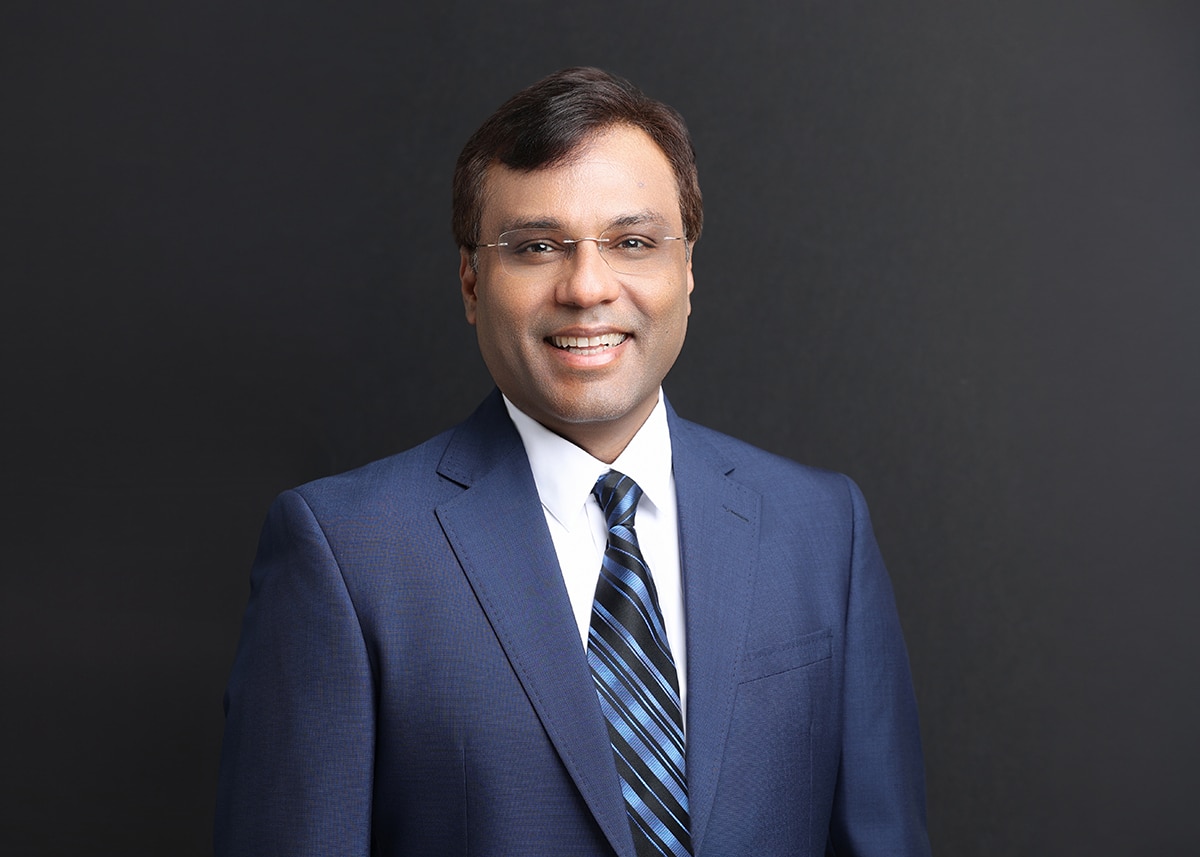
Rohit Prasad spent 12 years at Amazon making Alexa something a household would actually talk to. On October 7 he started a different job, as chief executive of Boston Dynamics, the Waltham, Massachusetts robot company Hyundai Motor Group has controlled since 2021. The speaker is already on the counter. The robot has a date on it.
He was born in Ranchi, in the Indian state of Jharkhand, and studied electronics at Birla Institute of Technology, Mesra. A master's in electrical engineering from Illinois Institute of Technology brought him to Chicago. He finished in 1999, then spent nearly 14 years at Raytheon BBN Technologies, the Cambridge research firm, on speech recognition and translation for government and commercial clients. Amazon hired him in 2013, before the company's first Echo speaker shipped in 2014, to build a computer you could talk to. He later called that assignment a Star Trek idea that bordered on impossible.
By May 2023 he could put a number on the bet. As senior vice president and head scientist for Alexa, he said customers had purchased well over half a billion Alexa-enabled devices, a count that includes other companies' gadgets as well as Amazon's own. His goodbye note in December 2025 put the same work in homes: conversational AI in hundreds of millions of households. If an Echo still takes the timer while dinner cooks, that is the product he is known for.
Boston Dynamics already sells machines that do a shift. Spot, its four-legged inspection robot, is in more than 1,500 customer hands, the company says. Stretch, a wheeled arm built to pull cases off a trailer, has been unloading freight for Gap, the apparel retailer. DHL, the logistics group, has said it plans to put more than 1,000 Stretch robots into its network by 2030, and has described runs of up to about 700 cases an hour. Atlas, the electric humanoid people know from the videos, is the one still in training.
On September 21 the company opened a practice floor inside Hyundai Motor Group Metaplant America, the car plant outside Savannah, Georgia, so Atlas can learn to line parts up in assembly order. Hyundai wants that job on the line in 2028, and component assembly around 2030. It also wants a U.S. factory able to build 30,000 Atlas robots a year, and it plans to place about 25,000 of them in Hyundai and Kia plants. As of August the plant itself had about 2,100 employees on Hyundai's payroll, with the wider site still hiring toward a promised 8,500. Those dates were on the calendar before Prasad's name was. A family with someone on a dock, or a kid looking at robotics work in Massachusetts or coastal Georgia, can treat 2028 as the year to ask what the shift looks like.
Hand material movers, the people who still walk the boxes, had a median wage of about $40,240 in the May 2025 wage figures. The Bureau of Labor Statistics counted about 1.84 million warehousing and storage jobs that December. In its separate 2025 household survey, Asian workers were 5.8 percent of people employed in that industry. Samsung Securities, a Korean brokerage, estimated in January that an early Atlas might cost $130,000 to $140,000 to build, and nearer $35,000 once output is around 30,000 units. Boston Dynamics has not published a price. At the early estimate, one robot costs about three to three and a half years of that median wage. At the scaled estimate, it costs a bit under a year. That is the comparison a plant manager is running. Stretch is the machine already doing a version of the trailer job.
Prasad got the seat because the last chief executive had already gone. Robert Playter, at Boston Dynamics for more than 30 years and chief executive after founder Marc Raibert stepped back, left at the end of February. Chief financial officer Amanda McMaster filled in while the board looked. Jaehoon Chang, Hyundai's vice chair and chair of the Boston Dynamics board, wanted someone who had already put an AI product in people's homes, then put that person next to the robot team and the car plants. The company did not publish Prasad's pay. He is expected to join the board once directors approve it.
He left Amazon at the end of 2025, on his own timing. In December, chief executive Andy Jassy said Peter DeSantis, a longtime Amazon Web Services executive, would run a wider group that puts AI models in the same organization as custom chips and quantum computing. Prasad wrote that the Nova models, Amazon's foundation models for business customers, felt like a place to stop. Nine months later he was in Waltham. An Amazon grant still vests on the dates in the paperwork. The person who ran Alexa science now gets paid by Boston Dynamics. Amazon's warehouse robots, the ones already rolling through fulfillment centers, sit with a different team.
Hyundai bought the lab so the famous videos would become a shift. In June 2021 it took an 80 percent stake from SoftBank, the Japanese group that owned Boston Dynamics, in a deal that valued the firm at $1.1 billion. SoftBank kept 20 percent. Google had owned the company before that. Raibert started it in 1992, spinning out of MIT's Leg Laboratory, where the research question was how a machine might walk. The clip people remember is a backflip. Chang hired a product executive because the next clip has to be a Tuesday at a car plant.
If an offer letter lands in the same family chat as this headline, write down which year the robot actually starts before anyone redoes the household budget. Atlas on a Georgia line is a 2028 plan. Stretch is already on some docks. The RSU Vest-Day Playbook for Diaspora Households is the page for an Amazon grant that still vests after the boss leaves. If the next job depends on a visa sponsor, read Visa and Job Change Runway When Leave Means Status Risk before anyone resigns. Parents on a monthly wire still need a number: the Family Support Budget Calculator keeps a new title from quietly raising the transfer.
On his watch, a speaker learned to take a grocery list. The assignment now is a robot that can take a box off a truck. One of those already lives in the house. The other is still practicing outside Savannah.
This is educational reporting on company announcements, wage surveys, and a brokerage estimate, not career, immigration, or investment advice. Deployment figures are plans. Your offer, your counsel, and your budget decide the real one.
Related content
Further diaspora reading
- CJ Desai left MongoDB's CEO seat after 10 months. Meta made him report to Zuckerberg. (Generational)
- RSU Vest-Day Playbook for Diaspora Households (Generational)
- Visa and Job Change Runway When Leave Means Status Risk (Generational)
- Fei-Fei Li Wants AI to Master the World in All 3 Dimensions (Goldsea)
- Mobile AI Warehouse Robots Featured in Amazon's $12 Billion Europe Push (Goldsea)
Generational Take
Get the next Generational Take
Get our latest practical tips and takes in your inbox. No spam.