
Miss A hit 100 stores selling makeup near $1. Its first investor priced the Dallas chain near $750 million.
Kenneth and Jean Baik took the company's first outside money from San Francisco's VMG Partners. The valuation was announced in Korean won. The size of the check was not.
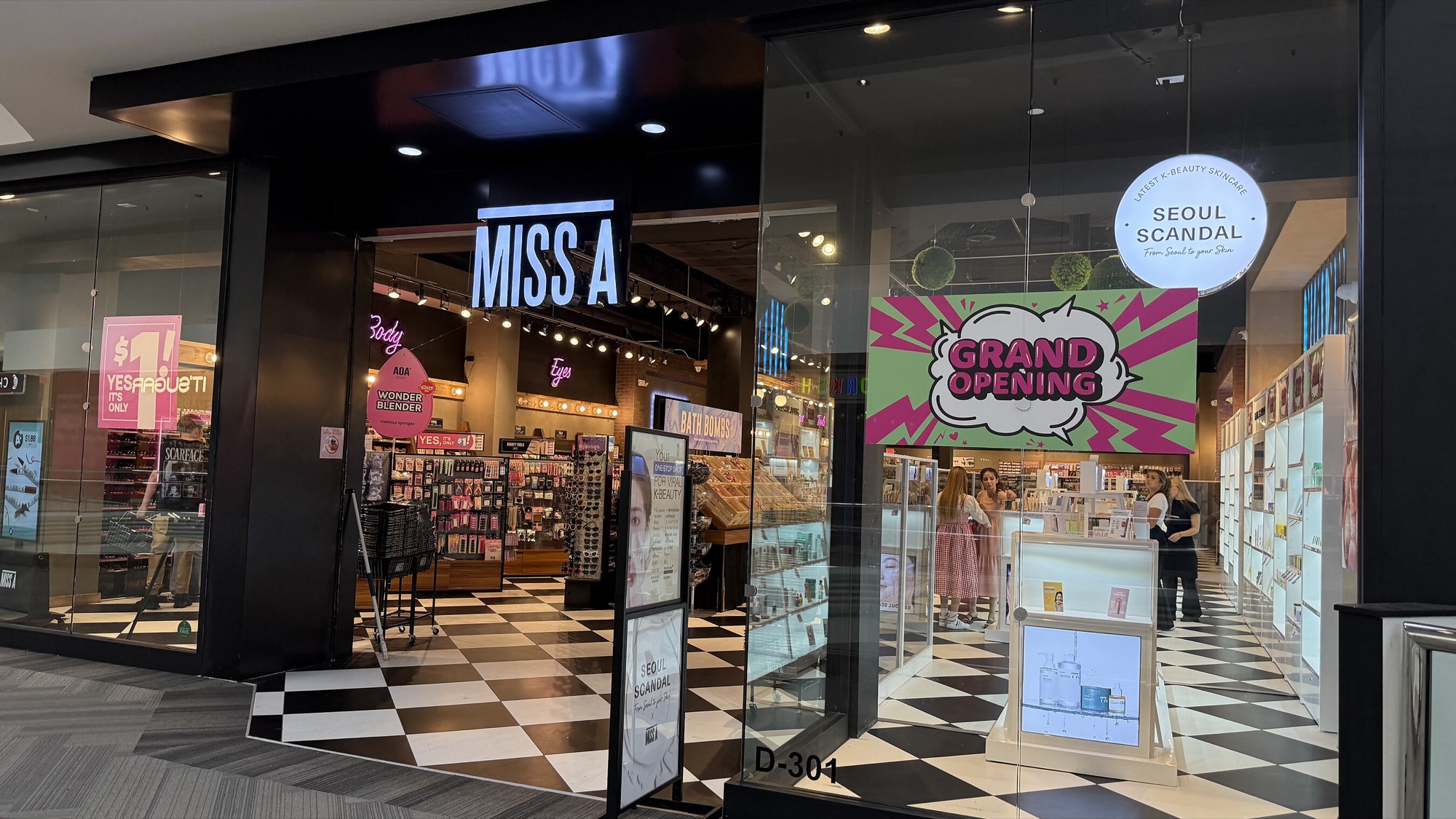
Miss A still sells a makeup blender for a dollar. On Thursday the Dallas chain said it has about 100 stores and has taken its first outside investor. VMG Partners, a San Francisco firm that backs consumer brands, bought a minority stake and left Kenneth and Jean Baik in charge. The announcement, issued from Seoul, valued the company at nearly 1 trillion Korean won. At about 1,324 won to the dollar, nearly 1 trillion won is roughly $750 million. Miss A never put the valuation in dollars. VMG never said what it paid.
The name belongs to Jean. She was born in the United States, raised in Northern California by Korean immigrant parents, and has said her Korean name is Jina and her middle name is the letter A. She chose Miss A over Miss J. She studied communications at the University of California, Berkeley, then fashion at Parsons in New York. Kenneth grew up in Richardson, Texas. He left the University of California, San Diego after his junior year, and at 21 went to China to watch a factory set a price. He told the Dallas Morning News he had saved $50,000 for a business with her. They married, moved to Dallas in 2013, and picked the city because a package could reach either coast from there.
Their parents had come in the early 1980s. Kenneth has described the businesses open to them then as a dry cleaner, a doughnut shop, or a convenience store. The company the Baiks studied was Forever 21, the fast-fashion chain Korean immigrants Do Won Chang and Jin Sook Chang built by turning trends over quickly and selling them cheap. The Baiks were aiming at a chain on that model.
The first store opened in 2016 at Grapevine Mills, north of Dallas. In 2024 the Morning News put a Miss A at about 3,000 to 3,500 square feet, around half a mall Sephora, with prices from $1 to $1.88. Most items are still under $2. Jean said the factories in South Korea and Taiwan also make products for drugstore brands, and that Miss A sells to the shopper without a distributor in between. The company says it does not buy traditional advertising. A store holds more than 15,000 products and swaps them every few weeks. Jean has described it as a place to try a trend without spending much if you end up hating it.
A hundred stores was the plan for early this year. In early 2024 the Baiks had about 30, in Texas, Oklahoma, New Mexico, and Arkansas. By June 2025 they were past 65, including Atlanta, Indianapolis, and Chicago, and they projected more than $100 million in revenue for the year. The store count showed up. The sales figure did not. VMG says a typical consumer investment from the firm runs from $10 million to $200 million. It closed a $1 billion fund last year, and its beauty deals have included Drunk Elephant, a skincare brand Japan's Shiseido later bought. The Miss A check was not among them.
The stores are the part you can visit. At Woodfield Mall in Schaumburg, Illinois, the newer counter in the window is Seoul Scandal, a Korean beauty shop inside the Miss A that the company started last year. A skincare line under that name is due by the end of 2026. The brand may already be closer than a mall. In June 2025 Baik Brands said Hous, a wholesale arm, had placed its products in more than 25,000 doors, among them Dollar General, Walmart, and Amazon. Thursday's release does not say whether that number still holds. A dollar blender in a Walmart aisle is a wider bet than a dollar blender in store number 100.
By 2030 the company wants 550 U.S. stores and $1 billion in Miss A sales. Sixteen months ago the parent had a smaller figure on a similar horizon: $750 million in sales for Baik Brands as a whole, wholesale included, within five years. The store goal was met late. The sales goal grew, and last year's revenue is still a projection. VMG can pay for leases and leave the founders' names on the glass. A shopper in the aisle still cannot see whether 2025 cleared $100 million.
A family shop will recognize the decision: whose money comes in, and whose name stays on the door. Small Business Banking When Your Books Don't Match Mainstream Templates is what a lender asks to see when the books were kept for a household. How to Build Generational Wealth as a Child of Immigrants picks up the next question, which is how the company stays in the family after that money arrives.
If you are in the mall, read the tag on the blender. The new money is for more stores. The price on that tag is the part you can check without a press release.
This is educational reporting on Miss A's October 22 announcement, its June 2025 expansion release, and Dallas Morning News profiles of the founders. It is not investment, tax, or business advice. The company has not published the check or last year's sales.
Related content
Further diaspora reading
- Small Business Banking When Your Books Don't Match Mainstream Templates (Generational)
- How to Build Generational Wealth as a Child of Immigrants (Generational)
- Succession and Exit Planning for Immigrant-Owned Family Shops (Generational)
- Vera Oh puts VOESH in 611 Target Beauty Studio doors. The brand started as Pedi in a Box. (Generational)
- Korean Bros put 100,000 cups of tteokbokki into Target. The trial still decides if they stay. (Generational)
Generational Take
Get the next Generational Take
Get our latest practical tips and takes in your inbox. No spam.