
Figma grew revenue 43%. Investors still sold the stock.
Third-quarter sales hit $391.4 million and guidance rose. Shares still fell about 17% the next session as AI credits and inference costs pulled gross margin down while management bets on durable usage.
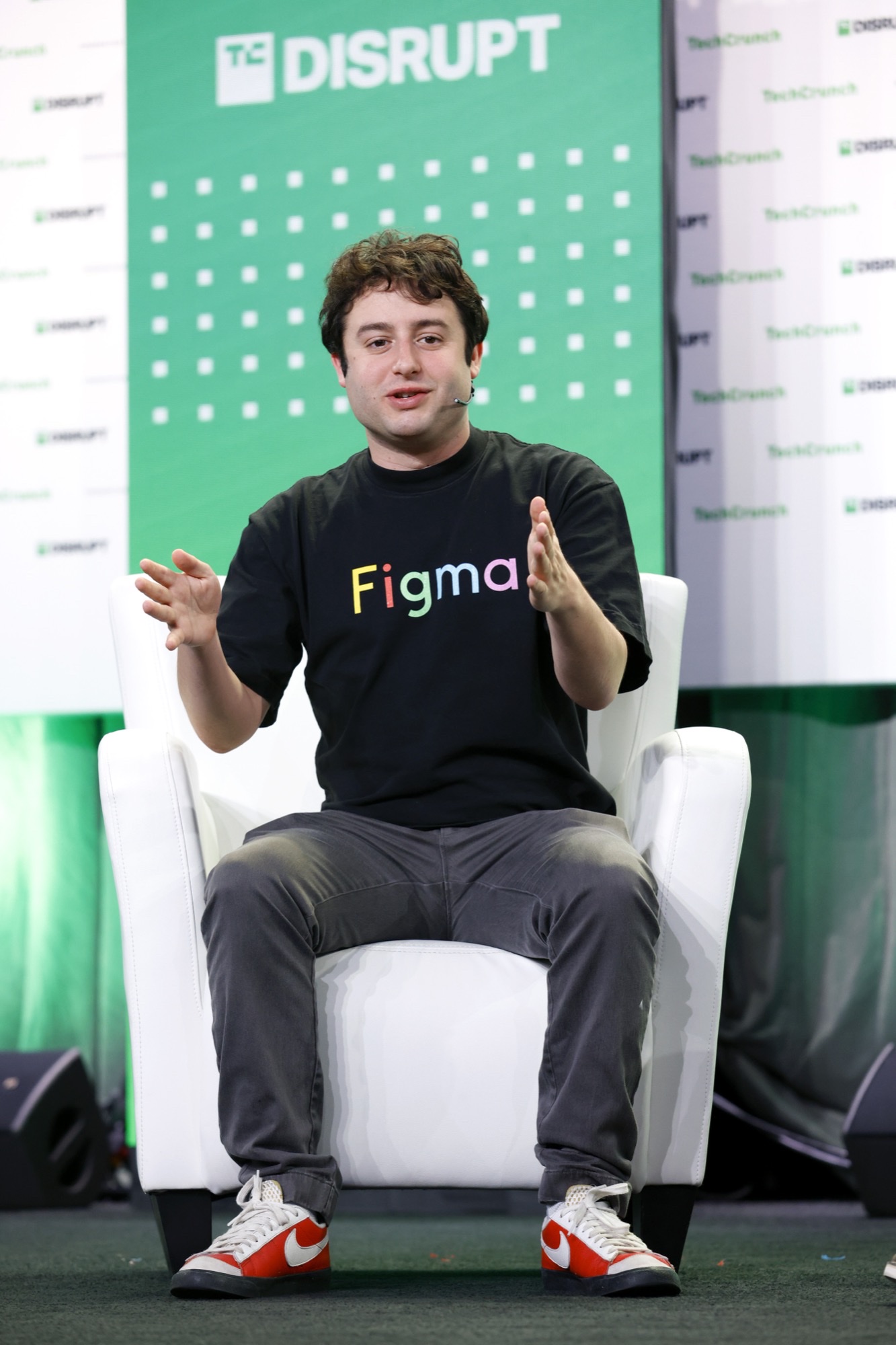
Figma printed the kind of growth quarter investors usually reward. Revenue rose 43% to $391.4 million in the three months ended September 30. The company raised its full-year sales outlook. The next session, the stock still fell about 17%.
Shares closed at $18.44 on November 5, down $3.69 from $22.13 the day before, when the San Francisco design-software company reported after the bell. Volume topped 30 million shares. The selloff was not about a miss. Adjusted earnings and revenue both cleared Wall Street’s numbers. The question was what it costs Figma to feed AI usage while it tries to lock that usage in.
Figma sells the collaborative canvas many product teams use to design apps and websites. Dylan Field, the co-founder and chief executive, took the company public on the New York Stock Exchange in July 2025 after a roughly $20 billion Adobe buyout collapsed in late 2023 under antitrust pressure. In the earnings release he said that as code becomes a commodity, value is moving up the stack to design, and that Figma is building a full-stack canvas increasingly powered by its first-party model.
That bet shows up first as credits. AI actions on Figma, including the Figma agent that helps generate and edit designs, burn metered credits tied to seats and paid add-ons. From July 1 through October 31, weekly active users consuming credits at organizations that spend more than $10,000 a year on Figma rose almost 50%. As of October 31, 65% of those larger paid customers were using the agent each week, and more than 80% were burning AI credits.
The company also covered the cost of running the agent’s inference in the third quarter ahead of a general launch on October 6. Praveer Melwani, Figma’s chief financial officer, told CNBC that giving customers more credits while holding prices can mean trading off near-term revenue to invest in those accounts and grow later. After an August reprice that packed more credits into add-ons, utilization of those add-ons rose about 40%, Melwani said. Weekly AI credit consumption across the platform, excluding beta use, jumped about 2.5 times as the agent moved to general availability.
Gross margin is where that choice hits the income statement. GAAP gross margin was 80%. Non-GAAP gross margin, which strips items such as stock-based compensation, was 82%, down from 86% a year earlier. Non-GAAP gross profit dollars still grew 36%, to $321.1 million. Operating income on a non-GAAP basis was $47.0 million, a 12% margin. Free cash flow was $41.5 million. GAAP still showed an $81.3 million net loss; the non-GAAP view adds back items such as stock-based compensation.
For a household that holds FIG, or that works a design or product seat where Figma is the daily tool, the useful question is whether management can turn subsidized usage into paid habit before the margin story gets worse. Figma says it more than doubled the share of agent work running on its own post-trained design model between July 1 and October 31, and that the in-house model matched or beat the prior production agent in 62% of head-to-head tests. Cheaper inference is the path the company is counting on.
Customers are expanding seats at the same time. Net dollar retention for accounts above $10,000 in annual recurring revenue was 131%, the fifth straight quarter above 130%. Figma counted 16,566 paid customers above that $10,000 line, up more than 3,650 from a year earlier, and 1,717 above $100,000. A Model Context Protocol server that lets outside AI tools plug into Figma files was the fastest-growing product by weekly active users in the quarter, with about 1 million weekly users and roughly 5% of platform credit consumption.
Guidance still points up, just slower. Fourth-quarter revenue is seen at $402 million to $404 million, about 33% growth at the midpoint. Full-year revenue guidance moved to $1.497 billion to $1.499 billion, about 42% growth, a raise of roughly $33 million at the midpoint. Non-GAAP operating income guidance rose to $158 million to $163 million, an 11% margin, up from a prior 9% target. Cash, cash equivalents, and marketable securities were $1.7 billion at quarter end.
After-hours trading on November 4 already slipped about 6% to 8% in early wires. The regular session on November 5 finished the cut. Growth software often trades on the next margin print as much as the last revenue beat, especially when the company is openly paying to get customers to adopt AI features.
If FIG sits next to other AI names in a brokerage sleeve, or if a relative’s RSU stack at a software employer moves with the same mood, start with a look-through rather than a headline. RSU Vest Day Playbook for Diaspora Households keeps vest sales and concentration caps separate from the product story. Taxable Investing Basics for First-Gen Professionals is for the after-tax account that owns single names. The portfolio-overlap warning from this week’s tech selloff is in Nasdaq falls 5.5% into a correction. Index funds, QQQ, and RSUs already stacked the same AI names..
Figma’s quarter was strong on sales and deliberate on AI cost. Investors priced the cost first.
Related content
Further diaspora reading
- RSU Vest Day Playbook for Diaspora Households (Generational)
- Nasdaq falls 5.5% into a correction. Index funds, QQQ, and RSUs already stacked the same AI names. (Generational)
- Cognition AI Raises $2 Billion at $48 Billion Valuation (Goldsea)
- 2 Jains Trigger Big-Tech Shootout at AI Corral (Goldsea)
- Taxable Investing Basics for First-Gen Professionals (Generational)
Generational Take
Get the next Generational Take
Get our latest practical tips and takes in your inbox. No spam.