
Pranav Sood returns to Airwallex as CFO for its next global phase
Airwallex brought back a former regional leader with experience in consulting, operations, and growth investing. His appointment offers a window into how the cross-border payments company is preparing to deploy capital, build regulated infrastructure, and serve businesses operating across markets.
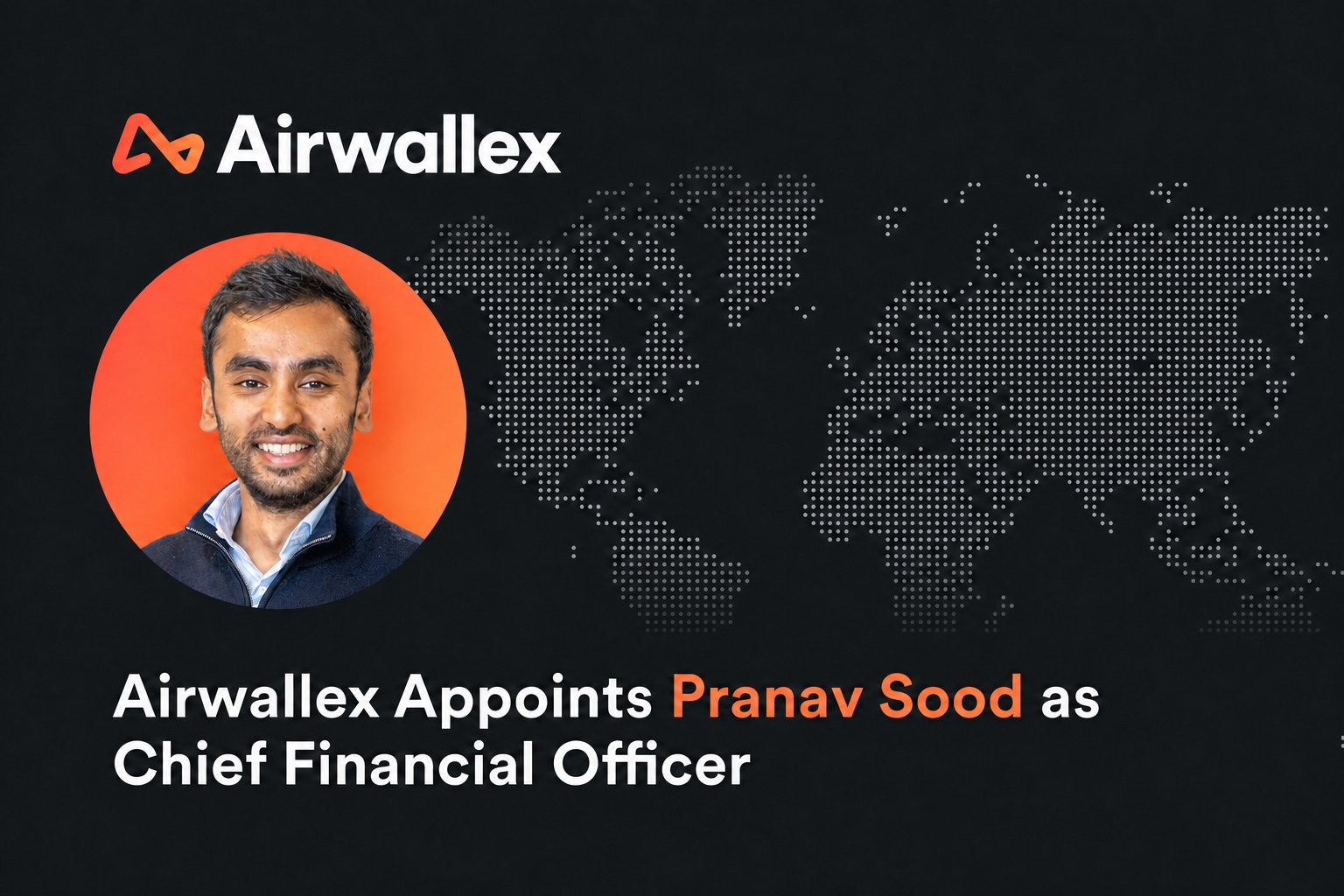
Airwallex appointed Pranav Sood as chief financial officer on June 24, bringing a former regional leader back to the cross-border payments company at a moment of rapid expansion. For diaspora professionals who build, advise, or work inside businesses spanning countries, his return offers a useful look at the person and strategy behind financial infrastructure that helps companies collect, hold, and move money across markets.
Sood will be based in London, Airwallex’s regional headquarters for Europe, the Middle East, and Africa. He arrives with a mix of consulting, operating, regional expansion, and investment experience that is less conventional than the accounting path many finance chiefs follow.
That combination appears central to the appointment. Airwallex co-founder and CEO Jack Zhang said the company wanted a CFO who could serve as both a commercial strategist and a financial steward, pointing to Sood’s knowledge of the business and his recent work at Bain Capital.
Sood began his career at Bain & Company, working on strategy across London, Mumbai, and Melbourne. He later moved to GoCardless, where he built its business operations and strategy function, led financial planning and analysis, fundraising, and special projects, and worked on expansion across Western Europe, Australia and New Zealand, and North America.
He eventually led GoCardless’s global small-business segment. In his own account of that period, Sood said he was responsible for major commercial partnerships and more than 70,000 small and medium-sized business customers transacting on the platform each month.
Airwallex first hired him in 2022 as general manager for EMEA, the corporate shorthand for Europe, the Middle East, and Africa. His remit stretched beyond regional sales. It included growth, operations, product requirements, partnerships, licensing, regulatory matters, talent, and customer outcomes.
That breadth matters at a company whose product only works at scale if its commercial plans remain connected to local rules and payment systems. EMEA is a business grouping, not a single legal jurisdiction. A platform expanding across the region must work through specific regulated entities and permissions in each market.
During Sood’s first Airwallex tenure, the company says he helped build its EMEA operation and establish its global marketing function. In a July essay about his path to the CFO role, Sood described how his team developed market and product playbooks across the United Kingdom, Europe, Israel, and the Middle East.
One focus was online travel. Travel companies often need to pay hotels, transportation providers, and other suppliers across several countries and currencies. Sood wrote that his team used Airwallex’s card-issuing and multi-currency wallet products to address that operational problem, then repeated the model across markets and other use cases.
He left Airwallex for Bain Capital’s Tech Opportunities team, where he worked with growing technology businesses in the United Kingdom and Europe. That added an investor’s view of capital allocation and management execution to experience he already had inside payments companies.
Sood has been careful not to frame his commercial background as a substitute for finance fundamentals. He wrote that accurate reporting, sensible capital allocation, and properly managed risk remain non-negotiable. His larger argument is that a modern finance team should also help leaders make difficult commercial decisions and build trust with regulators, partners, and customers.
The scale of that assignment became clearer across two consecutive announcements. Airwallex’s June 24 appointment release referred to the company’s $8 billion valuation, set when it raised $330 million in December 2025.
On June 25, Airwallex announced a separate $320 million Series H funding round at an $11 billion valuation. The company said the new capital would support product development, expansion into new regulated markets, infrastructure, and hiring. The timing is important because the $11 billion figure came one day after the CFO appointment, not as part of the June 24 announcement.
Airwallex also reported that it reached $1.3 billion in annualized revenue and $287 billion in annualized transaction volume in March 2026. Those are company-reported run-rate figures, which project recent performance across a year rather than representing completed audited annual results.
The company said it had more than 2,300 employees across 27 offices and held more than 85 licenses globally. It also said more than 90 percent of revenue came from customers using more than one Airwallex product, a sign of its effort to sell an integrated set of business accounts, payments, billing, cards, and spending tools.
Those global numbers become more tangible in London. Airwallex has committed $1.135 billion to EMEA expansion through 2030, with the money intended for new markets, products, and hiring. Its detailed regional announcement called for approximately 100 senior engineering roles in the United Kingdom, including engineers based in London for the first time. The CFO announcement described the roles as being in the United Kingdom and the Netherlands, so the precise split remains unclear.
The London office is more than an address for the new CFO. Airwallex moved its EMEA headquarters from Holborn to a Fitzrovia space of more than 16,000 square feet after its United Kingdom team passed 100 employees. The company has also said it plans to invest $590 million in its United Kingdom business from 2026 through 2030.
For professionals who operate across borders, the relevance lies in the business machinery beneath those commitments. A company may invoice clients in several currencies, pay contractors across continents, buy from overseas suppliers, or manage subsidiaries in more than one regulatory system. The finance platform it chooses can sit quietly inside all of those workflows.
Executive choices shape that machinery. A CFO helps determine where capital goes, how quickly teams are hired, which controls grow with the business, and how expansion plans are balanced against regulatory and operational risk. Sood’s background suggests Airwallex wants those decisions made by someone who has already managed its regional complexity and then evaluated technology companies from an investor’s seat.
The appointment alone does not establish what every product will offer in every country. A count of more than 85 licenses does not mean customers receive identical services or protections across jurisdictions. The relevant Airwallex entity, regulator, available products, and rules can change with the market where a business is incorporated and operates.
That is the practical question diaspora professionals can carry into their own work. Before relying on any cross-border financial platform, map where the company is incorporated, where it collects and pays money, and which currencies it needs to hold.
Then identify the provider entity serving each market and check it in the regulator’s register. Confirm the exact product, safeguarding terms, total fees, and expected settlement times, and decide what backup payment route the business would use during an outage or account review. The people running the platform matter, but so do the local details that turn a global promise into working infrastructure.
Related content
Generational Take
Get the next Generational Take
Get our latest practical tips and takes in your inbox. No spam.