
Amenah Pangandaman takes the helm of the Philippines’ only specialized Islamic bank
The former budget secretary now leads Al-Amanah, a state-owned bank with a large financial-inclusion mandate. For Filipino families across borders, her appointment is a reason to understand how Islamic banking works and what better access could mean in Mindanao.
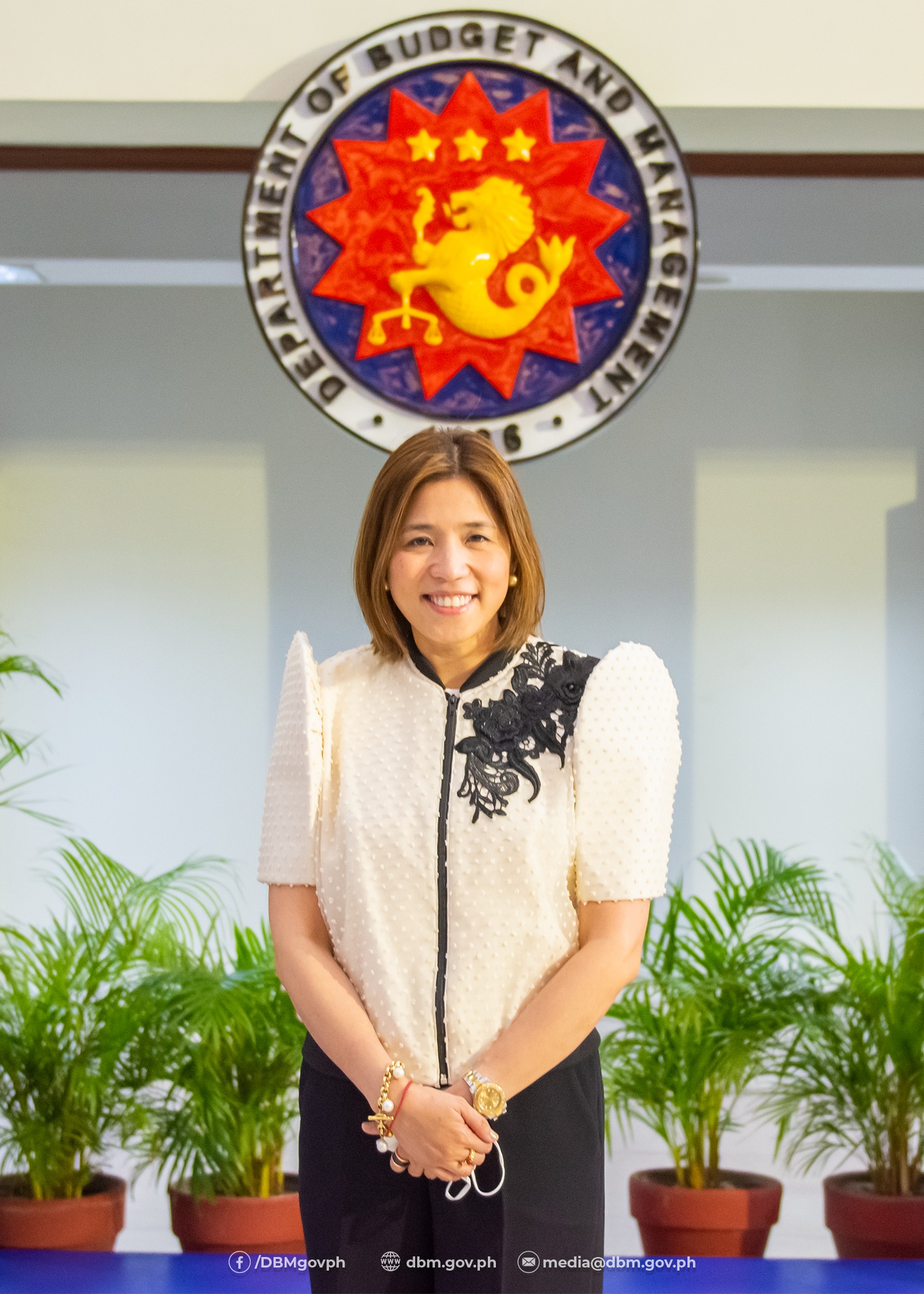
When Al-Amanah Islamic Investment Bank of the Philippines announced Amenah F. Pangandaman as its new chairperson and chief executive officer on July 10, it placed a familiar public official at the head of a much less familiar institution. For Filipino families sending money home or helping relatives build a business, the appointment opens a useful question: what can Islamic banking offer when a household wants regulated financial services that also fit its religious values?
Pangandaman brings a personal connection to that question. She is Maranao, has roots in Lanao del Sur and Marawi, and became the first Filipina Muslim to serve as secretary of the Department of Budget and Management. She has described herself as a daughter of Mindanao and the first budget secretary from Marawi.
Her résumé crosses several parts of government that now meet in her new job. She studied economics at Far Eastern University and development economics at the University of the Philippines, worked in the Senate, served as a DBM assistant secretary and undersecretary, and later became an assistant governor at the Bangko Sentral ng Pilipinas. At the central bank, her work included financial inclusion and digital transformation.
As budget secretary from 2022 to 2025, Pangandaman also co-chaired the body that coordinates the national and Bangsamoro governments. Her work touched Marawi recovery, regional public-finance capacity, and the institutions built around greater Bangsamoro autonomy. That mix of central banking, national budgeting, and regional experience is relevant to Al-Amanah’s mandate, although experience alone cannot guarantee a turnaround.
Her return to public service also carries political baggage. Pangandaman left DBM in November 2025 after her name was raised in allegations involving flood-control spending and claimed insertions in the 2025 national budget. She denied wrongdoing.
In July 2026, Palace Press Officer Claire Castro said Pangandaman faced no case at that time and stressed that she remained presumed innocent. The unresolved public scrutiny belongs in the record, but it should not eclipse the financial-access questions her new role puts in front of families.
Al-Amanah has been trying to answer versions of those questions for more than five decades. The government created its predecessor in 1973 as a development bank for Muslim communities. Republic Act No. 6848 established the current bank in 1990, set its principal home in Zamboanga City, and authorized Islamic banking, financing, and investment.
The Development Bank of the Philippines took control in 2008 and owns approximately 99.9 percent.
Al-Amanah is the country’s only dedicated or specialized Islamic bank, but it is not the only place offering Islamic banking services. Conventional institutions can operate Islamic banking units under BSP rules. CARD Bank and Maybank Philippines have entered that market, giving customers more than one institutional path to Shari’ah-compliant products.
The basic distinction begins with riba, or interest, which Islamic banking does not charge or pay. That does not make financing free. Instead, banks can earn through disclosed profit margins, leases, and partnerships structured around assets and shared commercial risk.
Consider a family abroad helping a relative buy equipment for a small shop in Mindanao. In a murabahah arrangement, the bank buys the identified equipment and sells it to the customer at its cost plus an agreed profit margin. The customer may pay that disclosed price in installments.
The structure replaces an interest-bearing cash loan with an asset sale, but the family still needs to compare the total peso cost and every payment condition.
Other structures distribute responsibility differently. Under mudarabah, a capital provider funds an enterprise while an entrepreneur manages it. They divide profits using an agreed ratio, while financial losses ordinarily fall on the capital provider unless the manager was negligent, committed misconduct, or broke the contract.
Ijara uses a lease structure. Musharakah allows parties to contribute capital to a partnership and share profit and loss under agreed rules.
These contracts sit inside the same regulated financial system as other Philippine banking activity. The BSP supervises Islamic banks and Islamic banking units. Its Shari’ah governance framework calls for board and management oversight, an independent advisory council or approved adviser, and separate compliance and audit functions.
Islamic banking is open to non-Muslims too.
The case for expanding it is especially visible in the Bangsamoro Autonomous Region in Muslim Mindanao. The BSP’s national financial-inclusion strategy found financial institutions sparse in BARMM and the neighboring Zamboanga Peninsula in 2020. An older BSP snapshot shows how deep the gap had been: in 2018, only 10 of 118 local government units in the former autonomous region had a banking office, and the region accounted for just 0.2 percent of Philippine deposit accounts.
Those figures are historical, not a current scorecard, but newer evidence still shows pressure on household finances. The Philippine Statistics Authority reported that BARMM had the country’s highest family poverty incidence in the first half of 2023 at 34.8 percent, even after a significant improvement from 2021. Distance, income, identification requirements, trust, security concerns, and digital access all shape whether a family can use formal finance.
Religious fit can be another barrier. A household that avoids conventional interest-bearing products may remain outside the banking system even when a branch or app is technically available. BARMM’s Islamic Finance Roadmap for 2024 through 2028 aims to build a functional regional system, with a focus on services that communities can trust and businesses can actually use.
For the diaspora, the stakes are practical. Overseas Filipinos sent $35.634 billion in cash remittances through the banking system in 2025, according to the BSP. Al-Amanah says it has arrangements with other banks for domestic and international remittance services, although its current partners, corridors, fees, and eligibility should be confirmed before a family changes how it sends.
A useful account can do more than receive a transfer. It may help a relative store money safely, pay bills, establish a transaction history, and keep household support separate from business capital. For siblings pooling money for a shop, farm, vehicle, or equipment purchase, that separation can make expectations clearer on both sides of the border.
Pangandaman’s appointment does not prove that more branches, better digital tools, or affordable products will follow. Progress will depend on the bank’s reach, pricing, systems, governance, and ability to earn trust. Her arrival is a reason to watch whether Al-Amanah turns a broad inclusion mandate into services families can compare and use.
Before switching a remittance route or signing a Shari’ah-compliant financing contract, ask for five things in writing: the total peso cost or profit margin, the exchange rate and transfer fee, delivery time, deposit-insurance treatment, and the rules for late payment or business loss. Compare the full terms with at least one regulated alternative. If relatives are funding a business together, agree separately on whether the money is a gift, a family loan, or an ownership investment, then keep records in both countries.
Related content
Generational Take
Get the next Generational Take
Get our latest practical tips and takes in your inbox. No spam.