
Northwood raises $375M for shared Earth antennas. Satellite operators may stop building their own.
The Series C values the Torrance startup at $2 billion. The bet is operators will rent contacts on a company-built ground network instead of owning dishes, and that manufacturing plus software make that network hard to copy.
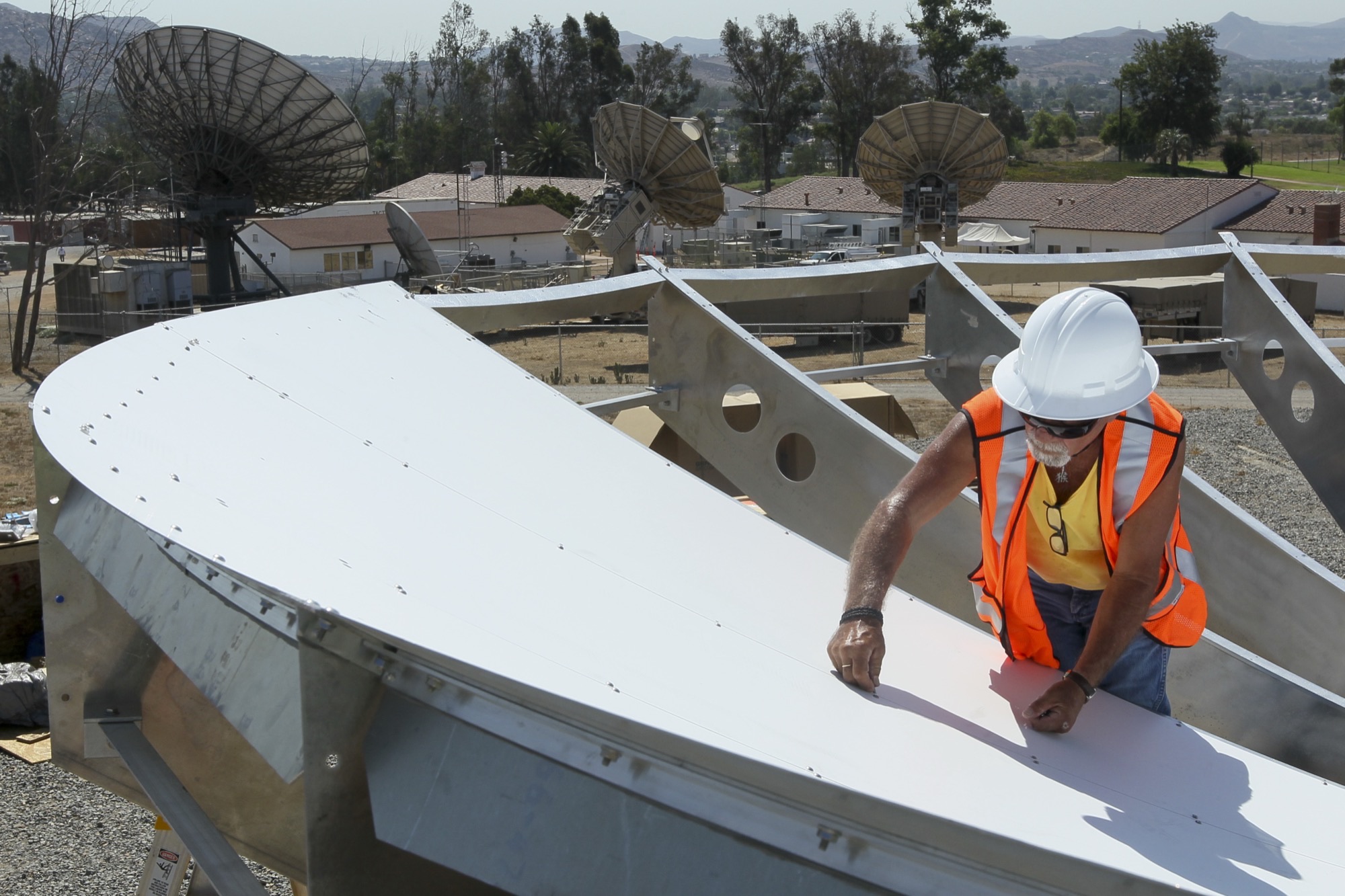
Northwood Space closed a $375 million Series C on November 2, co-led by Andreessen Horowitz and DFJ Growth. TechCrunch and Bloomberg put the valuation at $2 billion.
The Torrance, California company builds the Earth side of space: modular antennas, the sites that hold them, and software that lets operators book a live link the way a team books cloud capacity. The new capital goes to fulfilling contracts, hiring, and spreading that shared network for commercial customers, U.S. government agencies, and allied missions.
Active satellites jumped from roughly 3,000 in 2020 to more than 14,000 by the end of 2025, according to catalogs tracked by astronomer Jonathan McDowell. Launch got cheaper and faster. The ground did not keep up. Many stations still lean on large mechanical dishes that take a long time to order, install, and staff, and that often talk to one spacecraft at a time.
Northwood's product is a rent-the-network model. It designs and manufactures its own antennas in Torrance: Portal, a phased-array system for telemetry, tracking, and command across low Earth orbit to geostationary orbit, and Prism, a high-throughput dish for heavy payload data. Operators search, reserve, and cancel passes through an API. For select customers, Northwood also sells the same hardware used on the shared network.
The raise underwrites a simple question. Will enough satellite operators rent contacts on someone else's ground network instead of spending millions to own stations, hire operators, and wait months or years for the next site? Small missions already use ground-station-as-a-service providers such as KSAT, AWS Ground Station, and Leaf Space, paying per pass or per minute. Large constellations with priority or sovereignty needs still often build their own. Northwood is pitching company-owned modular gear, stood up in months, sold as shared capacity with more power and multi-orbit reach than a classic dish farm.
Copying the hard part means copying the whole stack. Northwood says a new site can stand up in about three months rather than years, and that antennas can go from truck arrival to live links in three to four hours when power and fiber are ready. Software combines multiple Portals into the receive performance of a much larger dish. The company opened a 185,000-square-foot headquarters and factory in Torrance in late August, expanding manufacturing more than fivefold so it can turn out hundreds of antennas a year. Since its Series B less than nine months ago, it says it has deployed six multi-orbit sites on two continents and demonstrated command capacity to a government geostationary satellite from a commercial phased array.
Government work makes that stack stickier. In January, alongside a $100 million Series B, Northwood announced a $49.8 million U.S. Space Force contract to support the Satellite Control Network, the Defense Department's aging set of antennas used for launch support, day-to-day control, and emergency recovery of tumbling or lost satellites. A 2023 Government Accountability Office report found that network running above the utilization level officials treat as stressed, with legacy antennas limited to one satellite contact at a time and thousands of schedule conflicts. Buying capacity from a commercial builder that can field multi-beam arrays is one way the Space Force is trying to catch up.
Follow-on capital in the Series C came from Washington Harbour Partners, which led the Series B, plus Alpine Space Ventures, Stepstone, In-Q-Tel, the nonprofit venture arm that invests for U.S. intelligence and national-security partners, and others. HSBC Innovation Banking added a separate multi-year credit facility. Katherine Boyle, a general partner at Andreessen Horowitz who sits on Northwood's board, said the firm has backed the company in every round since seed because ground infrastructure has to scale if space capacity does. Randy Glein, founder and managing partner at DFJ Growth, put the same idea in plainer terms: for data, what goes up must come down.
The founders built for that bottleneck on purpose. Bridgit Mendler, co-founder and CEO, came to space work after MIT coursework, Harvard Law, and time around the Federal Communications Commission's Space Bureau, after an earlier career as a Disney Channel actor. Griffin Cleverly, co-founder and chief technology officer, brought RF and packaging work from Lockheed Martin and communications work from MITRE. Shaurya Luthra, co-founder and head of software, immigrated from India as a child, studied electrical and computer engineering at Cornell, and helped build the ground segment at Capella Space, the radar-imaging company, before the three started Northwood.
For diaspora households that steer kids toward aerospace, Luthra's path is the useful one to keep next to the launch posters. The scarce skill is often talking to the satellite. Northwood says it has more than 140 employees and plans to add 400 jobs over three years in Torrance and Washington, D.C., across RF engineering, manufacturing, software, and site operations. Many of those roles still carry citizenship or export-control screens. The openings are still manufacturing, RF, and ops titles as often as propulsion.
The bet can still miss. Starlink-scale operators already run large private ground networks and may never be the core renter. Competitors with polar sites or deep cloud hooks are not standing still. A $2 billion valuation assumes Northwood will keep winning sites, spectrum, and government trust. The company has not published a full customer list beyond the Space Force work and earlier demos with operators such as Planet Labs.
For a household comparing space careers, or watching a cousin join a ground-ops team instead of a launch pad, the $375 million marks where bottleneck cash is landing this week. Bamboo Ceiling Navigation for Asian Diaspora Professionals is the page for title math after the IC seat. How to Negotiate When You Were Raised Not to Ask is for saying the RF or manufacturing work out loud in the offer loop. Industry exposure next to medicine and quants sits in Young employment in AI-exposed industries fell 12%. Quants and medicine still pay..
Rockets still get the posters. Northwood's raise is a bet that the next scarce inventory is a live antenna on Earth that someone else already built, staffed, and scheduled.
Related content
Further diaspora reading
- Young employment in AI-exposed industries fell 12%. Quants and medicine still pay. (Generational)
- Bamboo Ceiling Navigation for Asian Diaspora Professionals (Generational)
- Onkar Batra Wants to Put the Ground Station in Orbit (Goldsea)
- Asian American Space Pioneers (Goldsea)
- SpaceX's Satellite Ambitions Squeeze Out Rivals Reliant on Its Rockets (Goldsea)
Generational Take
Get the next Generational Take
Get our latest practical tips and takes in your inbox. No spam.