
GoTyme cut the ID-photo step. Philippine relatives can open a receive account in minutes.
The digital bank tied PhilSys authentication into account opening so customers verify against government records without uploading a passport scan. For Fil-Am senders, receiving-side friction just fell. Fee math and caps did not.
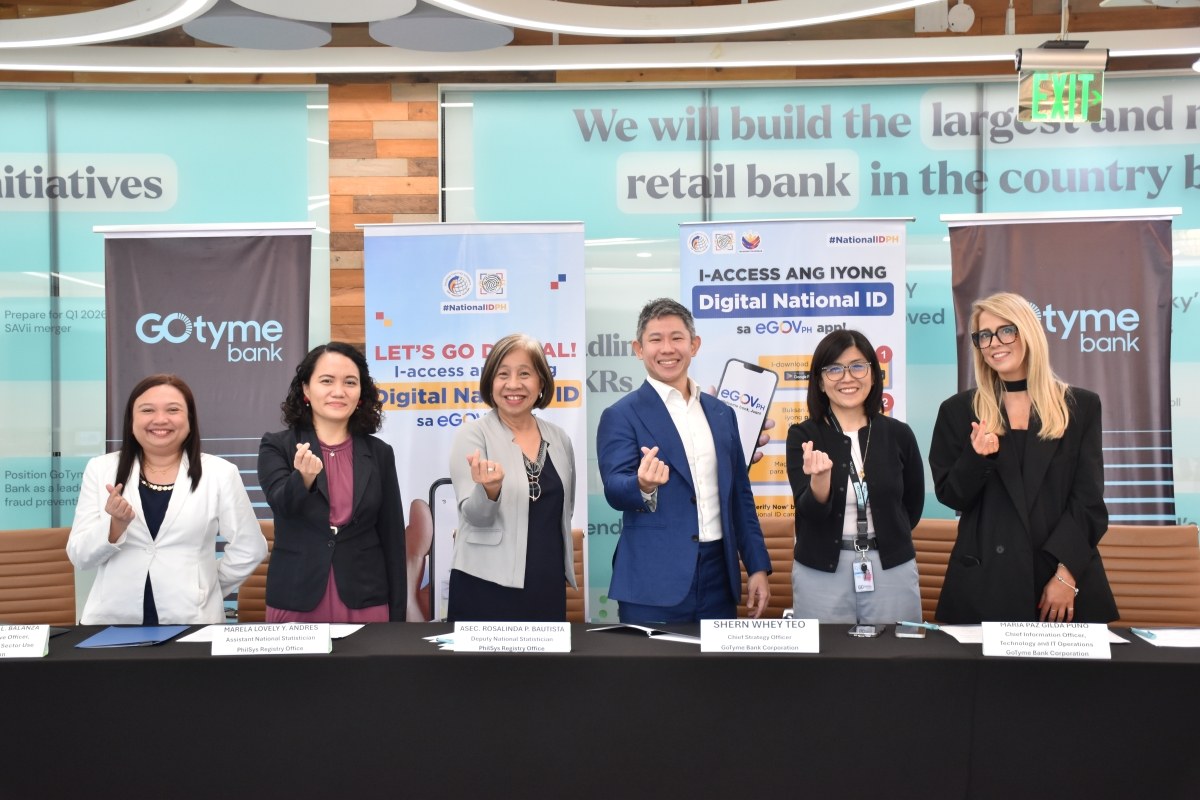
Opening a Philippine bank account used to stall on a photo of a passport or a driver’s license that would not upload cleanly on a weak signal. GoTyme Bank, the Bangko Sentral ng Pilipinas-licensed digital bank owned with the Gokongwei Group and Singapore-based Tyme Group, tied its onboarding flow directly into the Philippine Statistics Authority’s National ID Authentication Services. Customers can now verify identity against government records in real time without scanning or uploading a physical ID image, and the bank says a completed open can take as little as five minutes.
That is a receiving-side story for Filipino American households and OFW corridors, not a reason to raise the monthly send. Relatives in Quezon City, Cebu, or Davao who already hold a PhilSys National ID can clear KYC with a QR code on a physical, digital, or paper ID, a PhilSys Card Number, or name and date of birth. Shern Whey Teo, GoTyme’s chief strategy and proposition officer, framed the change as simpler and more secure because the check hits official records instead of a selfie of a plastic card. The national ID system itself sits under Republic Act No. 11055, the 2018 Philippine Identification System Act that made PhilSys the country’s foundational ID rail.
Coverage of the partnership landed through late July, with Newsbytes dating the integration write-up to July 31. GoTyme is not inventing National ID banking from scratch. Banks and wallets already accept PhilSys as a valid ID, and peers such as Bank of the Philippine Islands have also wired selfie checks into the same authentication services. What GoTyme is selling is the missing middle step: system-level authentication that drops the document-capture stage. PSA figures cited around the same week put PhilSys registration north of 90 million people, with cumulative authentications across government and private use climbing past 140 million. That is infrastructure scale, not a boutique pilot.
For a sender in California or New Jersey, the household gain is boring and useful. A parent or sibling who can open a regulated deposit account faster has a cleaner place for Remitly debit-card deposits, Wise transfers, SWIFT credits, or partner-network payouts that GoTyme already lists in its remittance help pages. Incoming pesos land in a PDIC-insured bank account, with coverage up to ₱1 million per depositor per bank under the March 2025 maximum. That is still a Philippine-peso insurance ceiling, not FDIC math, but it is a real bank balance instead of cash pickup at a counter when the family prefers digital.
GoTyme’s own remittance pages already lean into that receive path. The bank lists partner rails that include Remitly and MoneyGram card deposits, Wise and Western Union-style network credits, and SWIFT for larger bank-to-bank sends, with funds credited in pesos only. In late 2025 it also positioned itself as Wise Platform’s first international-receive bank partner in Asia Pacific, a detail that matters less as branding and more as a reminder that the account has to match the corridor tool you actually use. Opening in five minutes does not help if the relative’s account cannot accept the app you already trust.
Do not confuse faster onboarding with cheaper corridors. Bangko Sentral data put May cash remittances through banks near $2.71 billion, up about 2% year over year and among the softer monthly prints of the past year. Palawan Group executives told reporters their remittance volumes held up anyway. Your family’s fee stack still lives in the exchange-rate spread, the funding method, and whether the receive account can take the rail you already use. Opening speed does not change how many pesos land after Remitly, Wise, or a bank wire finishes.
Treat the news as a setup checklist, not a product endorsement. Confirm the relative’s PhilSys registration is active. Open or upgrade the receive account before a holiday surge. Ask which inbound method the account supports, then run a fresh quote on the same amount you usually send. If two siblings both wire into the new account, write the split so the parent’s grocery month does not accidentally double. Keep the send on a family support line in your U.S. budget so a smoother Philippine open does not quietly expand the obligation.
PhilSys will keep spreading across banks. GoTyme’s move matters because it shows the National ID becoming a live verification pipe for everyday finance, not only a card you flash at a branch window. For diaspora households, that is one less excuse for money to sit in limbo while someone hunts for a passport scan. The work that still belongs to you is comparing fees, naming a cap, and making sure the person who receives the money can actually use the account you just helped them open.
Start with Compare Remittance Fees to the Philippines From the U.S. and Plan Philippines Remittances in Your U.S. Household Budget. Run the numbers in the Remittance Fee Comparator before the next send, and keep the monthly line visible on the Family Support Budget Calculator.
Related content
Generational Take
Get the next Generational Take
Get our latest practical tips and takes in your inbox. No spam.